
Disclaimer: This post is for educational purposes only. It does not contain affiliate links. All information is based on personal experience and research. I have no financial relationship with any platform or service mentioned in this article.
A friend of mine spent two weeks building his Upwork profile before he even sent a single proposal.
He wrote a detailed biography, listed every skill he’d ever touched, crafted what he thought was a perfect hourly rate, and prepared four portfolio samples. Then he sent his first ten proposals. Got one response, a lowball offer from a client who wanted a 3,000-word article for $8.
He came to me frustrated, asking if Fiverr would be different.
I told him: ” Yes, but not in the way you’re expecting.
Both platforms work. Both have real buyers spending real money. But they work in completely different ways, and the platform that’s “better” depends almost entirely on what kind of freelancer you are, what stage you’re at, and how you prefer to find work.
I’ve spent meaningful time on both platforms. Here’s my honest, side-by-side take on everything that actually matters when you’re trying to decide where to put your energy.
The core difference, and why it changes everything
Before comparing specific features, you need to understand the fundamental model difference between these two platforms, because it shapes every other comparison.
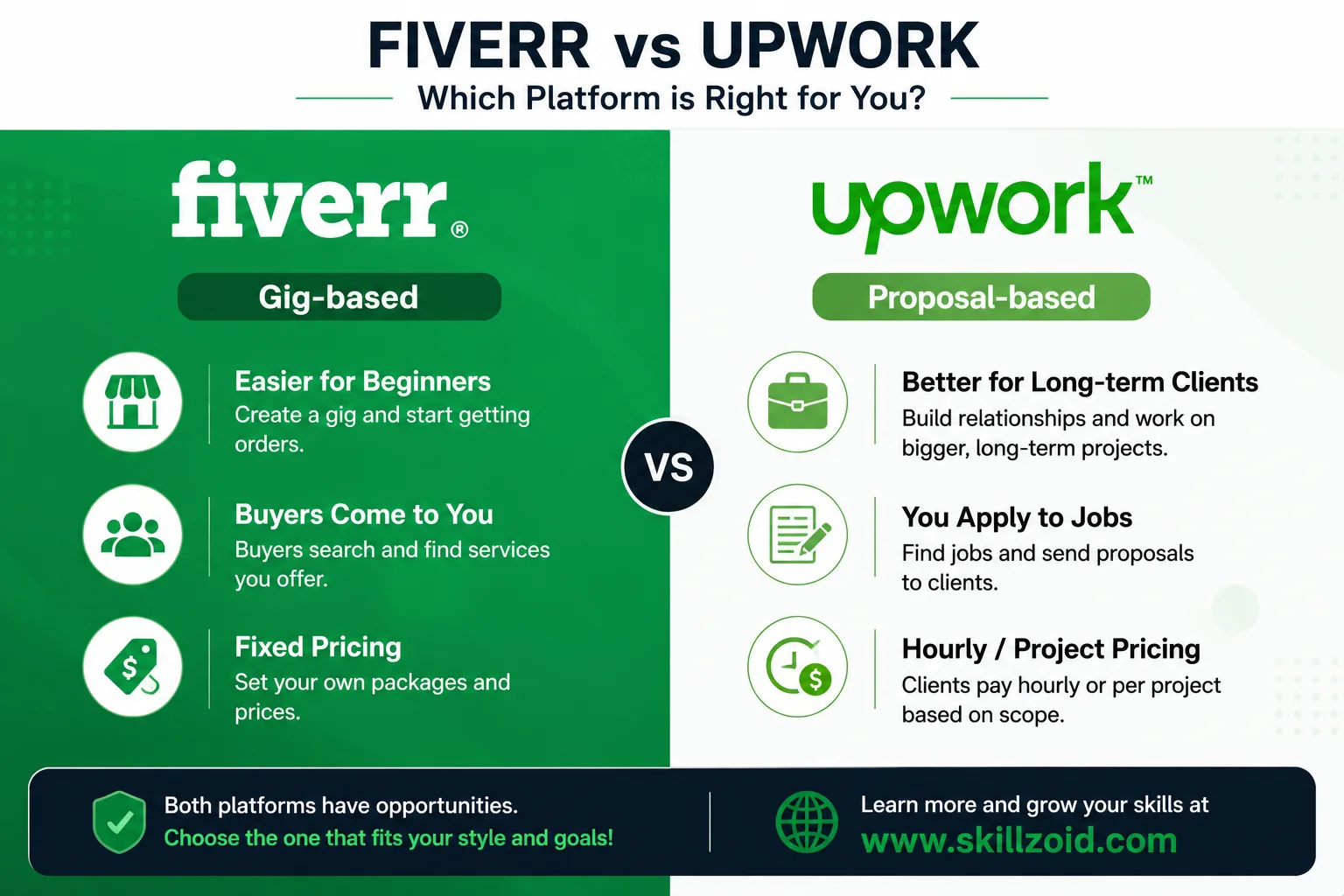
Fiverr is a product marketplace. You create gigs, essentially fixed service listings, and buyers browse, find you, and order. You’re the one who sets up what you’re selling, at what price, with what deliverables. Buyers come to you.
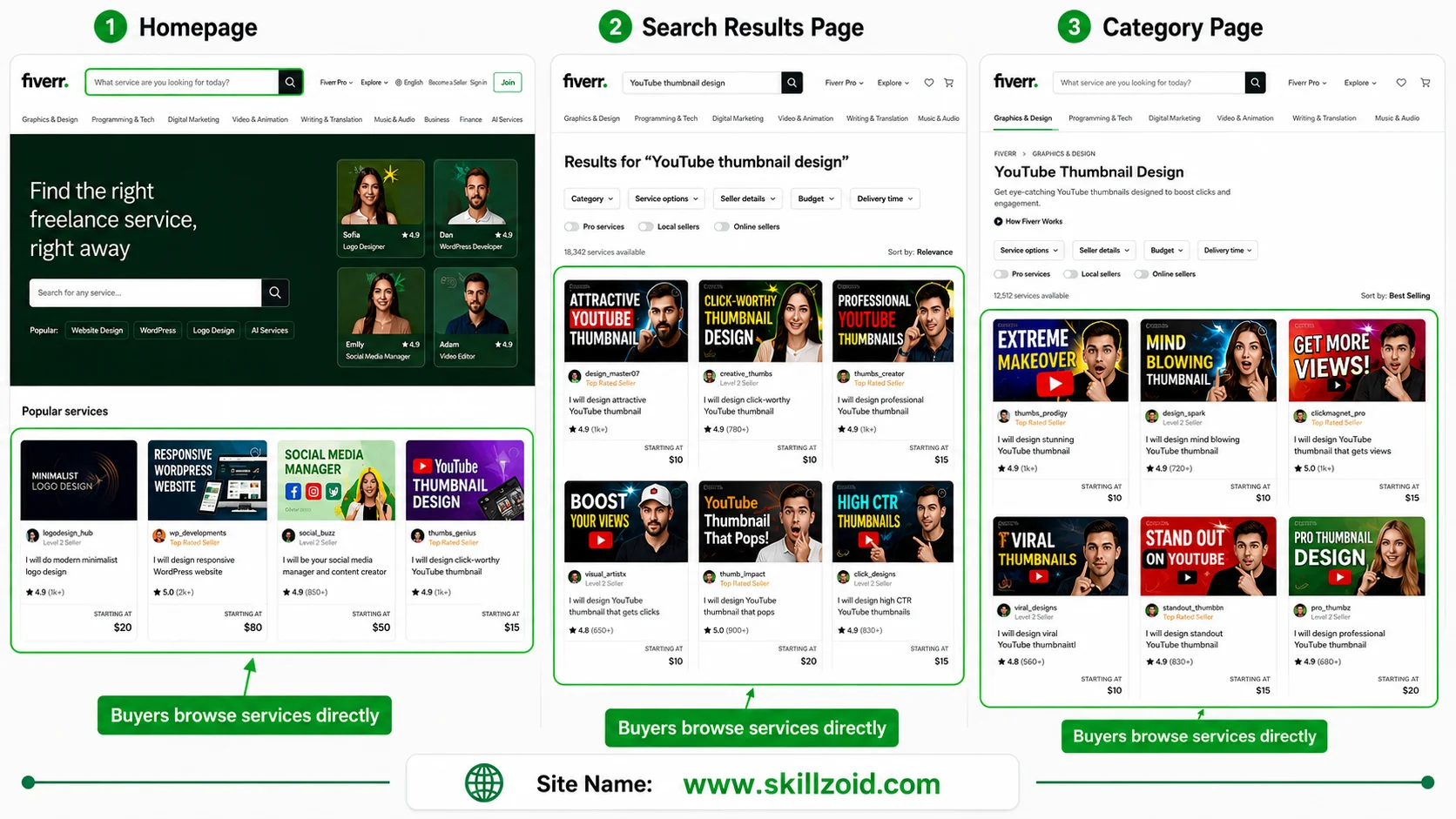
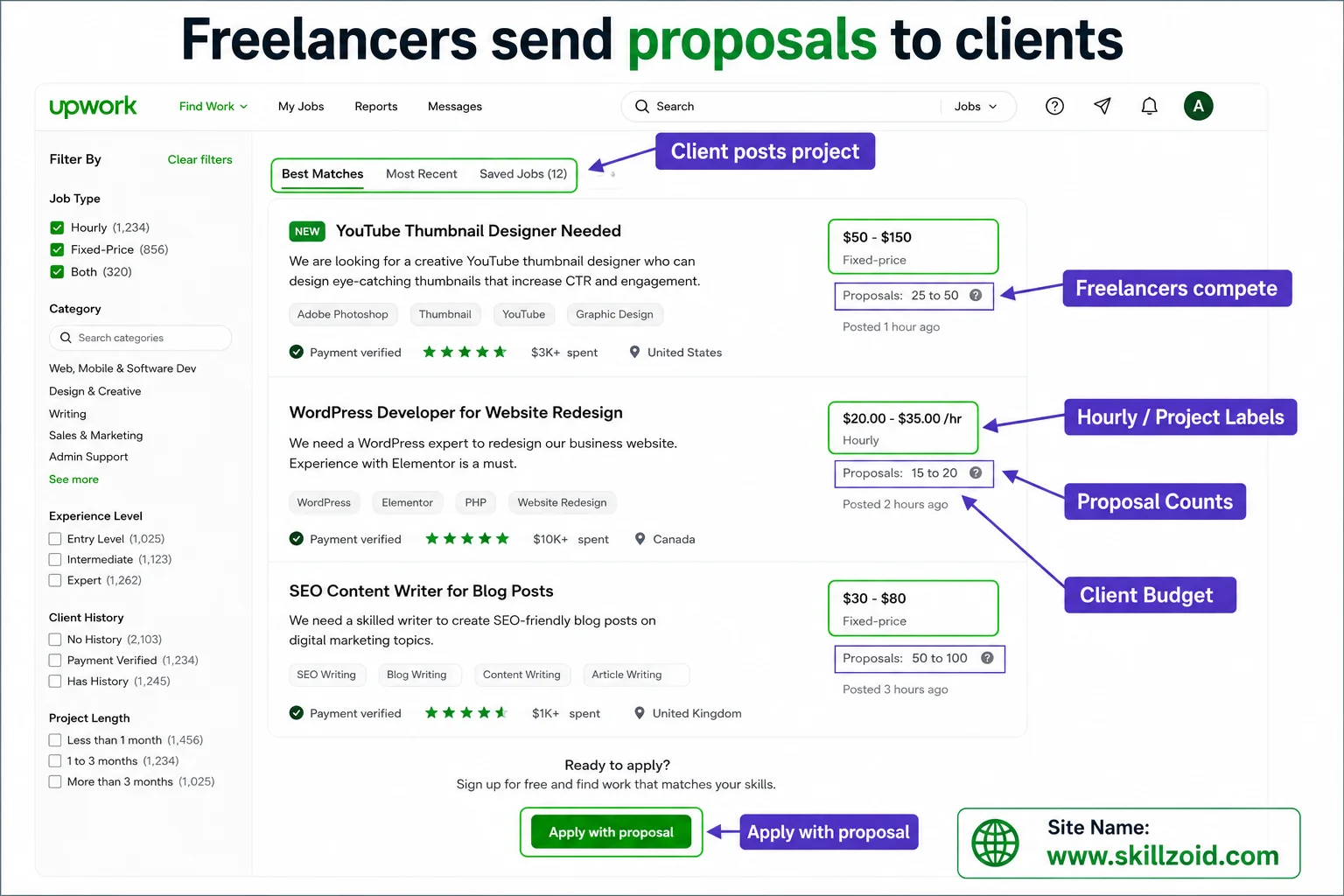
Upwork is a jobs marketplace. Clients post projects or open positions, and freelancers apply with proposals. You’re actively pitching yourself to individual clients, competing with other applicants, and often negotiating on scope and rate. You go to the buyers.
Neither model is inherently better. But they suit very different types of people and very different working styles.
If you’re someone who finds pitching and negotiating natural, who can write a compelling proposal and sell themselves in writing, Upwork’s model might suit you well.
If you’d rather define your service clearly once and let buyers come to you, no pitching, no negotiating every single project, Fiverr’s model makes more sense.
I personally find Fiverr’s model easier to manage, especially as someone who was starting without an established freelancing reputation. But let me break down the specifics so you can make your own judgment.
Getting started: Which platform is easier for beginners?
Fiverr has a lower barrier to entry for new freelancers. You create an account, set up a gig, and you’re technically live and available to buyers on the same day. No application process, no vetting, no minimum experience requirement.
The challenge is that being alive doesn’t mean being visible. As I’ve written about before, Fiverr’s algorithm gives new gigs minimal exposure by default. You have to work to get your first few orders, either through your personal network or by actively promoting your gig externally.
Upwork is more demanding to enter. You apply for an account, and Upwork approves or rejects applications based on how complete and competitive your profile is. In some high-saturation categories, getting approved can take multiple attempts or several weeks.
Once you’re in, you use “Connects”, Upwork’s credit system, to send proposals. Each proposal costs a certain number of Connects, and Connects are purchased or earned through various activities. As a new freelancer, you have a limited supply, which means you need to be selective about which jobs you apply to.
Verdict for beginners: Fiverr is easier to get started on and requires less upfront investment. Upwork has a steeper onboarding process and costs you Connects before you’ve earned a single dollar. For someone starting with no freelancing history, Fiverr is the more accessible first platform.
Fees: what each platform actually takes from your earnings
This is the section that surprises most people who haven’t used both platforms, and it’s worth understanding clearly before you commit.
Fiverr takes a flat 20% of every transaction. If a buyer pays $50 for your gig, you receive $40. Simple, predictable, and consistent regardless of how much you earn from a client.
Upwork uses a sliding scale based on your lifetime billings with each client:
- 20% on the first $500 you earn from a client
- 10% from $500.01 to $10,000
- 5% above $10,000 with the same client
On paper, Upwork’s fee structure looks more rewarding for long-term client relationships because the percentage drops as you earn more from the same client. In practice, for beginners who are still building relationships and working with many different clients at low volume, you’ll almost always be in the 20% tier, the same as Fiverr.
The difference matters more once you have repeat clients you’re billing significant amounts to. At that stage, Upwork’s sliding fee becomes a real advantage.
Verdict on fees: Roughly equivalent for beginners. Upwork becomes financially better over time if you develop long-term client relationships. Fiverr is simpler and more predictable.
How each platform handles competition
On Fiverr, competition lives in the search results. When a buyer searches for “logo designer” or “data entry,” they see a grid of gig thumbnails ranked by Fiverr’s algorithm. Your competition is every other seller whose gig appears on the same page.
The good news: once you have enough reviews and a well-optimized gig, the algorithm starts working for you rather than against you. You can rank for specific search terms and receive inbound orders without pitching a single person.
The bad news: in popular categories, the search results are crowded with experienced sellers who have hundreds of reviews. Getting visible as a new seller requires deliberate effort, optimizing your gig properly, driving your own initial orders, and building reviews from scratch.
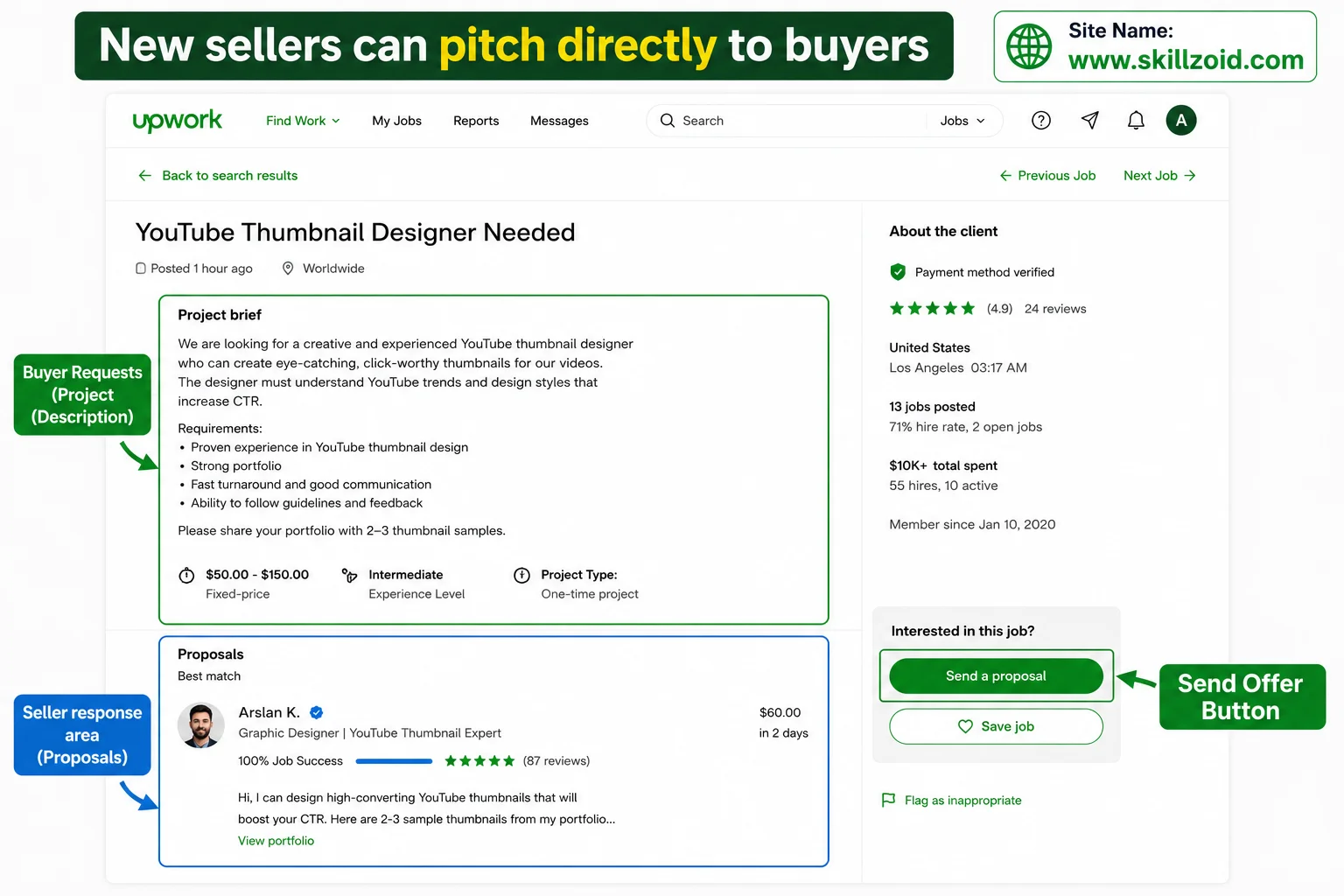
On Upwork, competition lives in the proposal queue. When you apply for a job, you’re competing with every other freelancer who applied for the same posting. Clients typically see proposals in order of submission speed and quality. Getting there early with a strong, specific proposal helps.
The other reality on Upwork: many clients have already worked with freelancers and have strong preferences. A new account with no Upwork job history is a harder sell than on Fiverr, where a strong gig and a few reviews can compete meaningfully with more experienced sellers.
Verdict on competition: Both platforms have real competition. Fiverr’s competition is algorithm-based; optimize your gig well, and you compete on merit. Upwork’s competition is proposal-based; write better proposals than the other applicants, and you get the work. Beginners tend to find Fiverr’s competition more navigable because there’s no limit on gig “applications”, your gig stays visible 24/7 without you spending Connects.
The type of work available on each platform
This is where the platforms genuinely diverge in meaningful ways, and it affects which one suits your skill set.
Fiverr is strongest for clearly packaged, defined services. Logo design, video editing, voiceover recording, data entry, social media graphics, basic SEO tasks, WordPress fixes, services where the deliverable is specific and the scope is clear. Buyers on Fiverr generally know what they want, have a defined budget, and are looking for a fast transaction.
Upwork has a wider range of longer-term, higher-value project types. Clients post full software development projects, ongoing content marketing retainers, business consulting needs, and complex multi-phase work that doesn’t fit neatly into a packaged gig format. The average contract value on Upwork tends to be higher than on Fiverr for equivalent skill levels.
Upwork also has a dedicated section for hourly contracts, which suits developers, virtual assistants, and consultants who prefer billing by the hour rather than by deliverable.
Verdict on work type: If your service is packaged and deliverable, “I will design X” or “I will write Y”, Fiverr is the natural fit. If your work is project-based, long-term, or better suited to hourly billing, Upwork gives you more of that type of work.
Income potential: Which platform pays more?
Honestly, this question doesn’t have a clean answer because income on both platforms depends far more on the individual seller than on the platform itself.
What I can say from experience and from watching other sellers:
Fiverr is better for volume-based income, completing many orders at accessible price points, and building a steady stream of work through a well-ranked gig. It rewards consistency and gig optimization.
Upwork is better for relationship-based income, landing a few high-value clients, converting them into long-term retainers, and increasing your earnings per client over time. It rewards proposal quality and client communication.
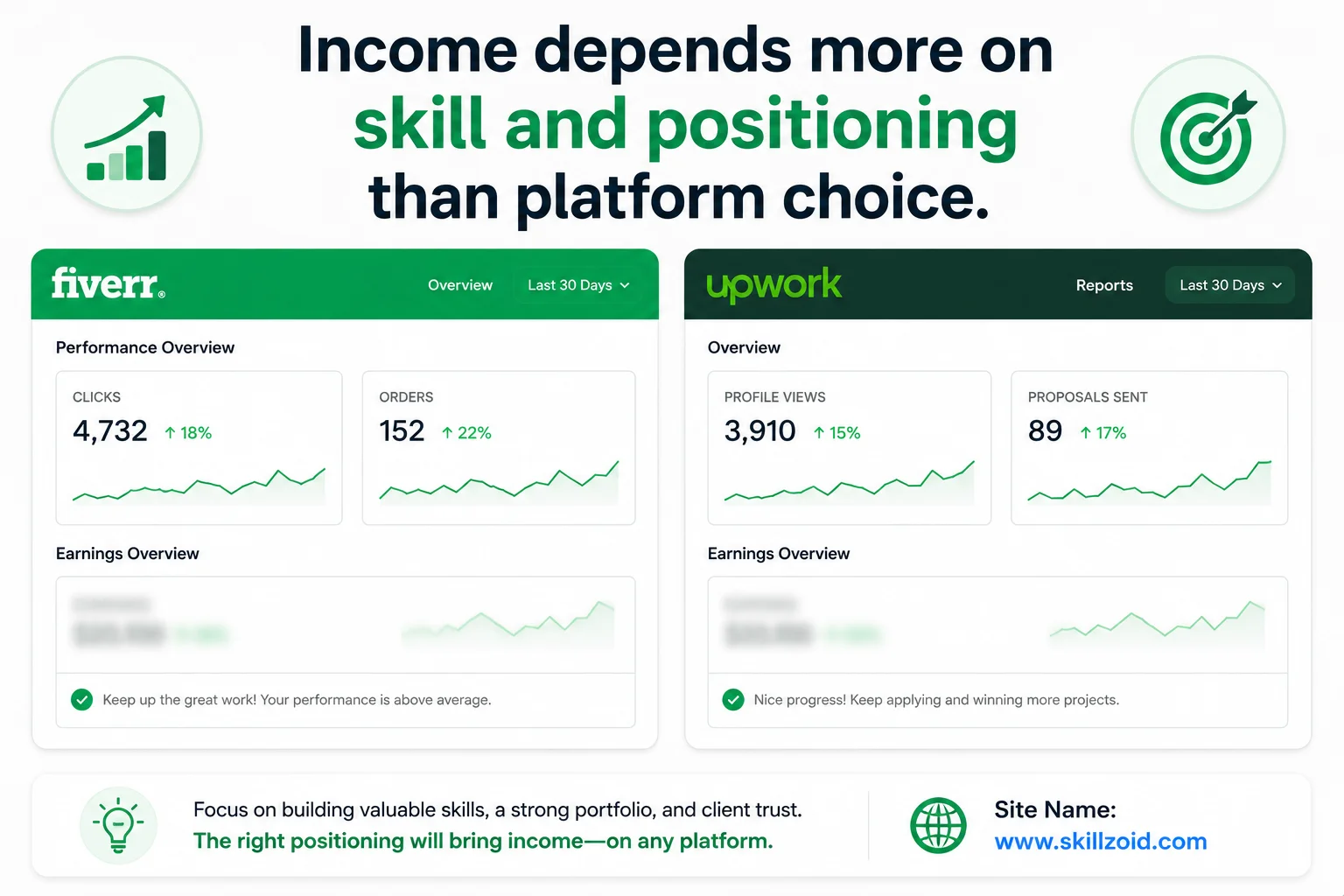
A skilled seller who’s optimized their presence on either platform can earn well. The platform doesn’t cap your income; your positioning within it does.
What I’d caution against: expecting either platform to generate significant income quickly without deliberate effort. Neither one is passive. Both require real work, real skill delivery, and real patience in the early months.
Which platform is better for freelancers in Pakistan?
This is worth addressing specifically because the question comes up a lot, and the answer matters practically.
Both platforms are accessible to Pakistani freelancers. Both support Payoneer for withdrawals, which is the most reliable payment route for sellers in Pakistan, given PayPal’s limited support in the country.
Fiverr has a historically larger Pakistani seller community, which means more local knowledge, more YouTube tutorials in Urdu, more support groups on Facebook and WhatsApp, and more sellers who have already figured out what works in our market.
Upwork works for Pakistani freelancers too; there are successful Pakistani developers, designers, and writers earning well on Upwork, but the proposal-based model is harder to break into for complete beginners without a strong portfolio or an established freelancing track record.
My personal recommendation for a Pakistani freelancer starting from zero: begin on Fiverr, build your first reviews and income there, develop your portfolio through real completed work, and then consider adding Upwork once you have a credible body of work to show clients.
The mistakes people make when choosing between them
Trying to be active on both simultaneously from day one. Both platforms require attention, responding to messages, maintaining metrics, and optimizing gigs or proposals. Splitting your focus between two platforms when you haven’t established yourself on either usually produces mediocre results on both. Pick one, get traction, then expand.
Choosing based on what sounds more prestigious. Some people choose Upwork because they feel it’s more “professional” or “serious” than Fiverr. Some choose Fiverr because Upwork sounds complicated. Neither reason has anything to do with what’s actually going to work better for your specific skills and working style. Base the decision on the fit, not the perception.
Giving up on a platform after one bad experience. One rejected Upwork application or one slow month on Fiverr doesn’t mean the platform doesn’t work. It usually means the approach needs adjustment. Both platforms have a learning curve that most people don’t give themselves enough time to work through.
Not researching whether their service fits the platform’s buyer base. Highly technical, complex, long-term project work doesn’t sell well as a Fiverr gig. Simple, clearly defined, fast-turnaround services don’t usually generate the best returns through Upwork proposals. Match your service type to the right platform before investing significant time in either.
So which one should you actually start with?
If you’re a complete beginner with no existing freelancing portfolio and no established client base, start with Fiverr.
The lower barrier to entry, the gig-based model that doesn’t require constant pitching, and the larger community of beginner-friendly resources make it a more forgiving first platform for someone building from scratch.
Once you have fifteen to twenty completed orders on Fiverr and a few solid portfolio pieces to show for it, you’re in a much stronger position to approach Upwork, where having real examples of completed client work makes your proposals immediately more credible.
The two platforms aren’t competitors; you have to choose between them forever. They’re tools. Use the right one for where you are right now, and add the other when it makes strategic sense to do so.
Taha Sohail is a blogger and cyber engineer who writes about freelancing, online earning, and digital skills at Skillzoid.com.
Related reading: How to Make Money on Fiverr Beginner’s Step-by-Step Guide | How to Get Your First Order on Fiverr Fast (2026 Guide) | How to Build a Full-Time Income on Fiverr in 2026