
Thirty days sounds like a marketing promise. I get why you might be sceptical.
But let me tell you what I mean by it, because I am not talking about mastering a skill to the level of someone with three years of professional experience. I am talking about reaching the level where you can deliver something genuinely useful to a real client, price it honestly for your current level, and start building the foundation that compounds into something more over time.
That threshold is lower than most people think. And it is reachable in 30 days for the right skills, with focused effort.
I know this because I have been on both sides of it. I have learned skills specifically to add to my Fiverr service offering. Some took longer than 30 days to feel confident with. A few clicked within two weeks. And I have also hired sellers on Fiverr who were clearly early in their journey.
Their work was not perfect, but it was genuinely good enough to be useful, and I left them positive reviews because they delivered what they promised at the price they charged.
That is the target. Good enough to be genuinely useful. Honest about your current level. Priced accordingly. Growing from there.
Here are the skills I would focus on if I were starting from zero today.
1. Short-Form Video Editing
Why it works: The demand for short-form content, YouTube Shorts, Instagram Reels, TikToks, is not slowing down. Every business, every creator, every brand is trying to produce this content. Most of them cannot edit videos themselves and do not want to learn. They outsource it.
What “30 days competent” looks like: You can take raw footage and produce a clean, engaging 60-90 second short, proper cuts, captions, background music, colour correction, and a polished look that matches the creator’s existing style.
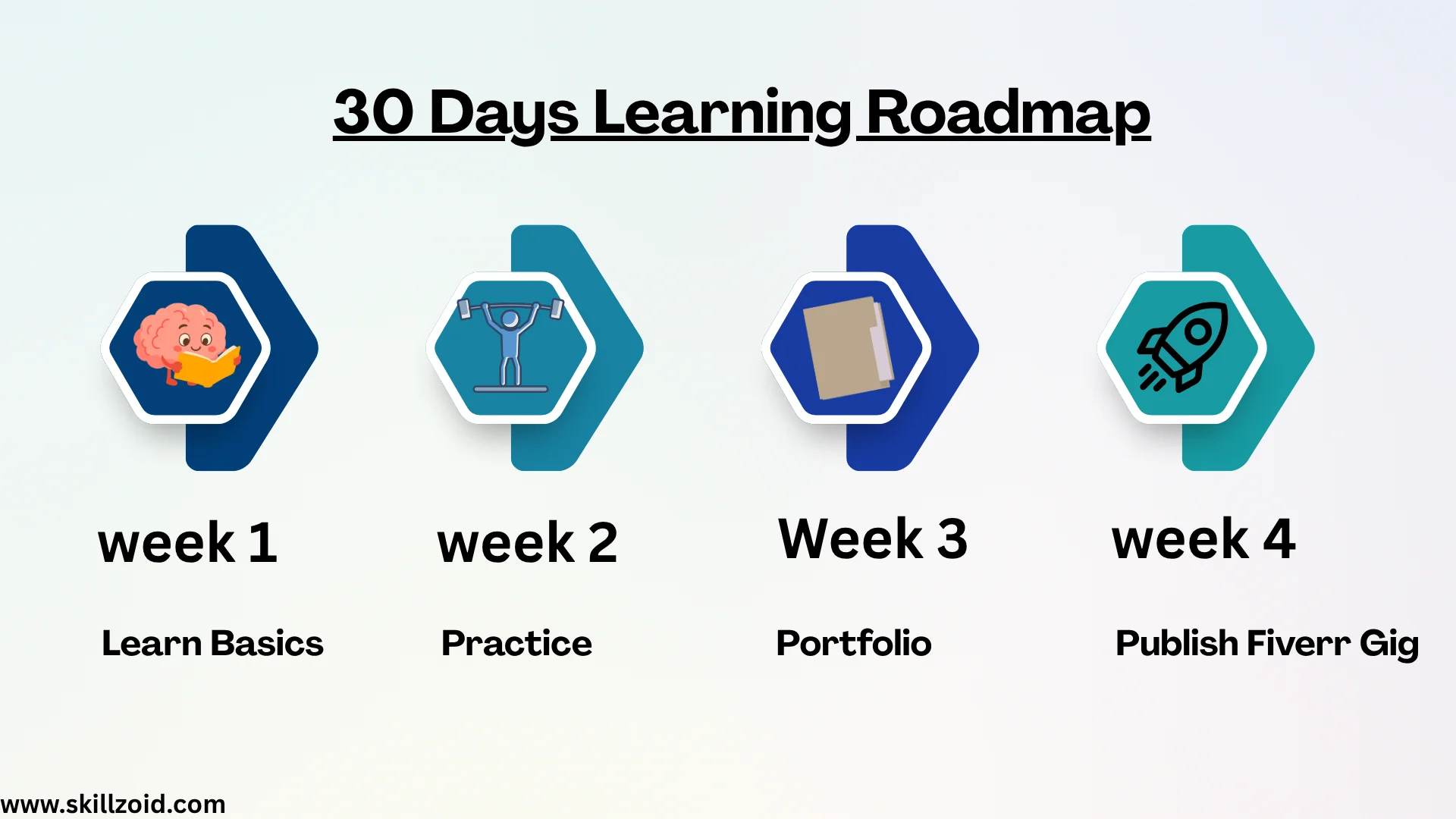
How to get there: CapCut is the fastest tool to learn for this specific format. It is free, has a desktop version, and most of the effects and transitions that perform well on short-form platforms are built directly into it. Spend the first week watching the top-performing Reels and Shorts in one or two niches, study what they do with pacing, text, and hooks. Week two, recreate similar edits using free stock footage from Pexels Video. Week three, create three original sample edits using your own recorded content or free footage. Week four, build your gig and publish.
Realistic starting price on Fiverr: $15 to $30 per short-form edit as a new seller with samples but no reviews. Raise it as your reviews accumulate.
One honest caveat: This market is competitive. The way to stand out is specialisation, edit specifically for fitness creators, real estate agents, or food bloggers. A niche-specific editor is hired faster than a general one at the same skill level.
2. Canva Graphic Design
Why it works: Millions of small businesses, content creators, and non-profits need visual content, social media posts, presentations, flyers, business cards, thumbnails, and cannot afford or justify hiring a full graphic designer for every piece. Canva-level design fills that gap perfectly.
What “30 days competent” looks like: You can design clean, professional-looking social media graphics, presentation slides, or marketing materials that match a client’s brand colours and feel cohesive and intentional.
How to get there: Canva‘s own free tutorial library covers everything you need in roughly a week of serious engagement. The key learning in week one is understanding visual hierarchy, why some designs feel balanced and professional while others feel cluttered. Week two, practice recreating designs you admire from scratch. Week three, create a portfolio of sample projects: five Instagram post templates for a fictional brand, a 10-slide presentation deck, and a business card set. Week four: build and publish your gig.
One thing that separates good Canva designers from average ones: Restraint. Using fewer fonts, fewer colours, and more whitespace almost always produces a more professional result than trying to use every feature Canva offers. The sellers who charge $5 for Canva work and the sellers who charge $35 are often using the same tool; the difference is taste and restraint.
Realistic starting price: $10 to $25 for a set of social media templates or a basic presentation design.
3. AI-Assisted Copywriting and Content Editing
Why it works: In 2026, a huge number of businesses are generating content using AI tools, and immediately discovering that AI-generated content needs significant human editing to sound natural, accurate, and brand-appropriate. The skill of refining AI content into polished, human-quality writing is genuinely in demand and still relatively underserved on Fiverr.
What “30 days competent” looks like: You can take a piece of AI-generated content, identify where it sounds robotic or generic, rewrite those sections in a natural human voice, check factual claims, improve the structure, and deliver a piece that reads as if a thoughtful person wrote it.
How to get there: You need two things. First, a strong enough grasp of writing to recognise what sounds natural versus what sounds AI-generated, reading good journalism, essays, and long-form content regularly is the best way to develop this instinct.
Second, familiarity with how AI tools write, which you develop by using ChatGPT, Claude, or Gemini regularly and critically observing their patterns and weaknesses.
Week one: read 20 to 30 AI-generated blog posts and annotate every sentence that feels robotic, repetitive, or generic. Understand the patterns. Week two: practice rewriting those sections in a natural voice.
Week three: take three AI-generated articles and edit them fully. Week four: build your gig offering “AI content editing and humanisation”, a specific, searchable service with genuine demand.
One important note: Be honest in your gig about what you are offering. You are editing and improving AI content, not writing from scratch. Buyers who understand what they need will appreciate the clarity.
4. WordPress Basic Setup and Management
Why it works: Tens of thousands of small businesses launch WordPress websites every month. A significant portion of them are not technical and struggle with basic setup tasks, installing themes, configuring plugins, setting up contact forms, improving page speed, and connecting their domain.
These tasks are genuinely intimidating for non-technical business owners and genuinely straightforward for anyone who spends 30 days learning them.
What “30 days competent” looks like: You can install WordPress, set up a professional-looking website using a free or paid theme, install and configure essential plugins (Yoast SEO, WooCommerce basics, Contact Form 7, a caching plugin), and troubleshoot common issues.
How to get there: Start with a free hosting account on InfinityFree or a cheap shared hosting plan and install WordPress on it. Do everything manually, install themes, break things, fix them, break them again.
This hands-on failure-and-fix process teaches you faster than any tutorial. YouTube has comprehensive free WordPress tutorials; the channels WPBeginner and Darrel Wilson have walked millions of beginners through exactly this. By week three, build a complete sample website for a fictional business. Week four, create your Fiverr gig.
Realistic starting price: $30 to $75 for a basic WordPress site setup as a new seller. This is one of the higher-earning beginner skills on Fiverr because the task feels large and technical to buyers, even when it is manageable for someone who has practised it.
5. English Proofreading and Copy Editing
Why it works: Non-native English speakers running businesses, students submitting work, and authors publishing independently all need someone to read their writing carefully and correct it. The demand is consistent and global. If your English grammar and vocabulary are strong, this skill requires almost no tool investment and very little learning curve beyond understanding the specific conventions of proofreading.
What “30 days competent” looks like: You can read a document carefully, identify grammatical errors, awkward phrasing, inconsistent punctuation, and unclear sentences, and deliver a clean, corrected version with tracked changes in Google Docs or Word.
How to get there: Week one, study the most common grammar errors that non-native speakers make in English, subject-verb agreement, article usage (a/an/the), preposition choice, and tense consistency. Resources like Purdue OWL and Grammarly’s blog cover these thoroughly and for free. Week two, practise proofreading real documents, use Reddit’s r/proofreading community, which sometimes shares practice texts, or find freely available essays and articles to work through. Week three, proofread three sample documents end-to-end and compile them as your portfolio. Week four, build your gig.
Important: Do not use Grammarly to do the proofreading for you and deliver that output as your work. Buyers are paying for your judgment, not automated corrections. Grammarly is useful as a secondary check after your own careful read, not as a replacement for it.
Realistic starting price: $5 to $15 per 1,000 words as a new seller. Fast to deliver, no major upfront tool cost, and consistent demand across multiple buyer categories.
6. Social Media Content Writing
Why it works: Small businesses understand they need to be on social media. Most of them do not have the time, energy, or writing instinct to produce consistent content themselves. A seller who can reliably produce captions, post copy, and simple content calendars in a consistent brand voice is solving a real, recurring problem.
What “30 days competent” looks like: You can write a week’s worth of social media captions for a brand across Instagram, LinkedIn, or Facebook, varied in format, consistent in voice, appropriate for the platform’s tone, and with relevant hashtag suggestions included.
How to get there: Week one, study the social media presence of 10 different small businesses in one niche, a local restaurant, a fitness brand, and a skincare company. Note what their captions do well and where they fall flat. Week two, write practice captions for fictional versions of those businesses. Week three, create a sample content calendar, seven days of posts for a fictional brand, and build this into your portfolio document. Week four, publish your gig.
The skill here is not writing in general. It is written briefly, specifically, and in someone else’s voice. The writers who do this well are the ones who listen carefully to how a brand already sounds and extend that, not the ones who impose their own writing style onto every client.
How to Choose Which Skill to Learn
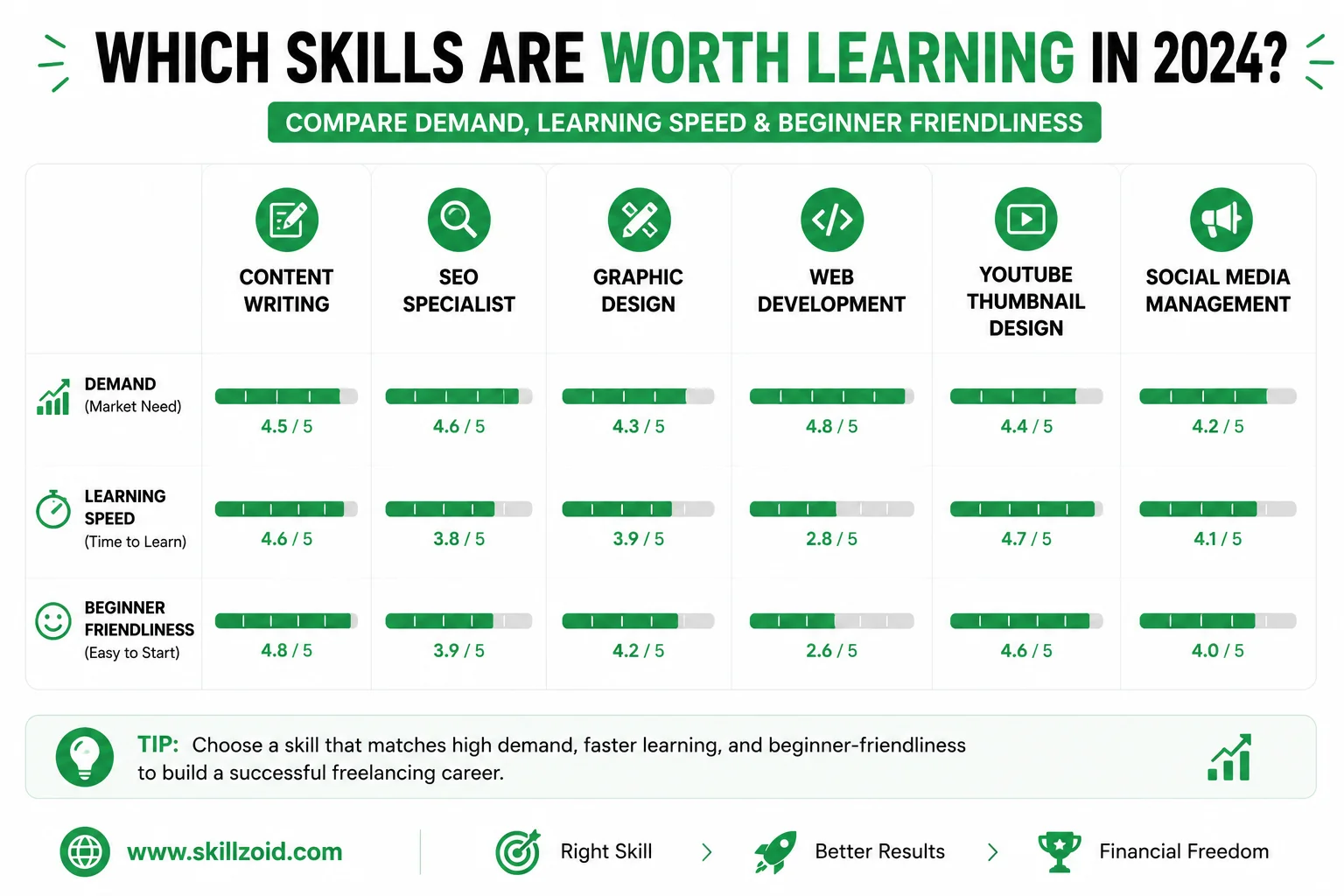
If you try to learn all six of these in 30 days, you will learn none of them properly.
Pick one. The right one for you is the answer to this question: which of these am I closest to already?
If you already watch a lot of short-form video and have a rough sense of what makes a Reel engaging, start with video editing. If you already write regularly and your grammar is strong, start with proofreading or content writing. If you have tinkered with websites even slightly, WordPress will come faster than you expect.
The skill that builds on something you already know, even partially, will take you to a competent level in 30 days. A skill you are starting completely cold might take 60 or 90 days to reach the same threshold.
That is not failure. That is just honest timeline management.
What 30 Days Actually Looks Like in Practice
I want to be specific here because “30 days of learning” is vague in a way that sets people up to drift.
Thirty days of one focused hour per day. Every day. No zero days.
That is 30 hours of deliberate practice, watching, doing, breaking, fixing, and building samples. For the skills on this list, 30 hours of deliberate hands-on practice is enough to reach a functional, deliverable level.
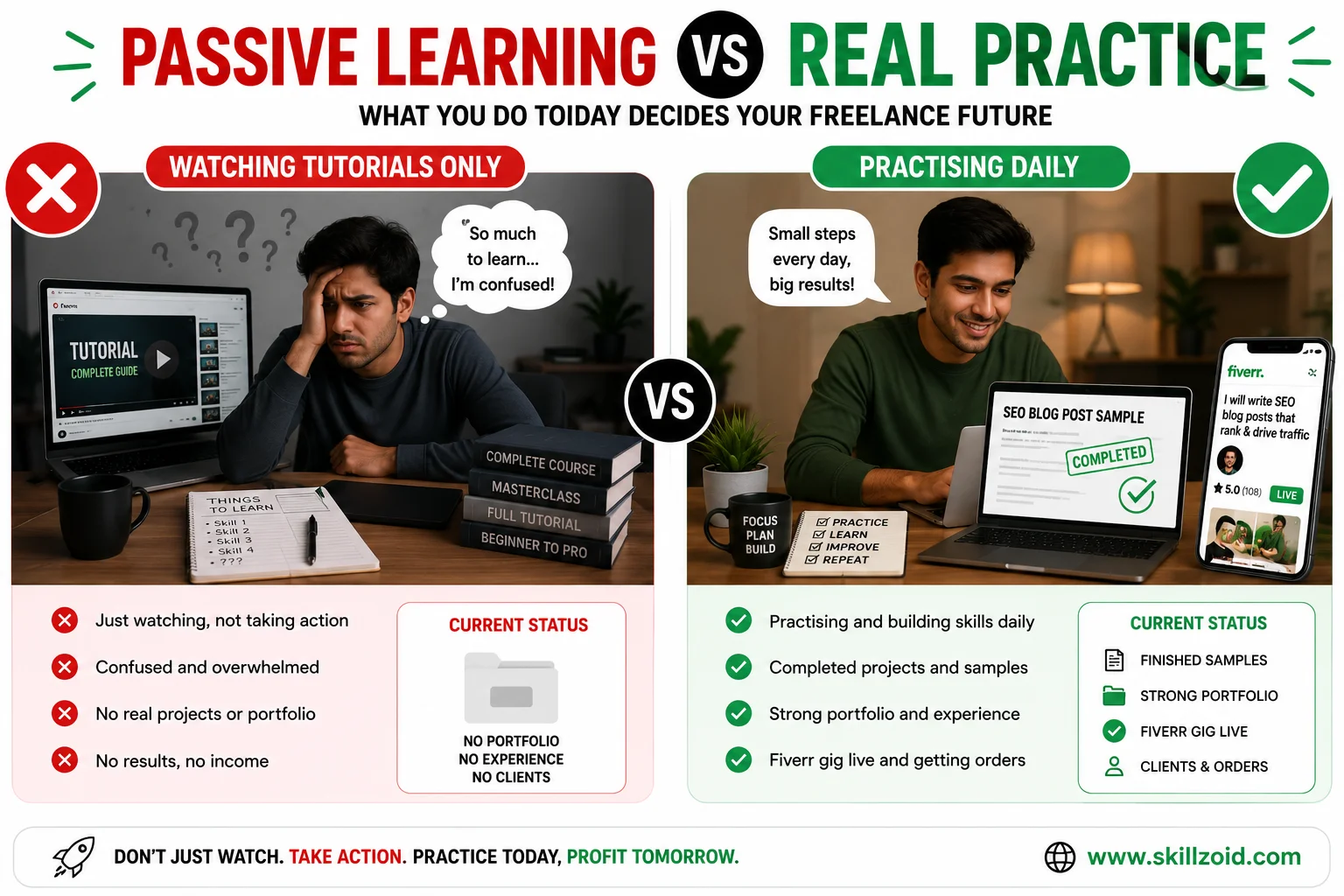
The trap most people fall into is passive learning, watching tutorials without doing anything. You can watch 30 hours of CapCut tutorials and still not be able to edit a video confidently, because the knowledge lives in the watching, not in your hands.
Every tutorial you watch should be followed immediately by doing the same thing yourself. The tutorial shows how to add captions in CapCut. Close the tutorial and add captions to a clip.
The tutorial shows how to install a WordPress plugin. Install a plugin on your practice site right now.
Learning by doing is slower and more frustrating than watching. It is also the only kind that actually works.
One More Thing Before You Start
Whatever skill you choose, do not wait until you feel ready to create your Fiverr gig.
Create the gig at the end of week three, before you feel fully ready. Having a live gig with a deadline in view changes how you practise in week four. The urgency is useful. The accountability of a public listing is useful. And the worst case is that you take a week or two longer than expected before your first order comes in.
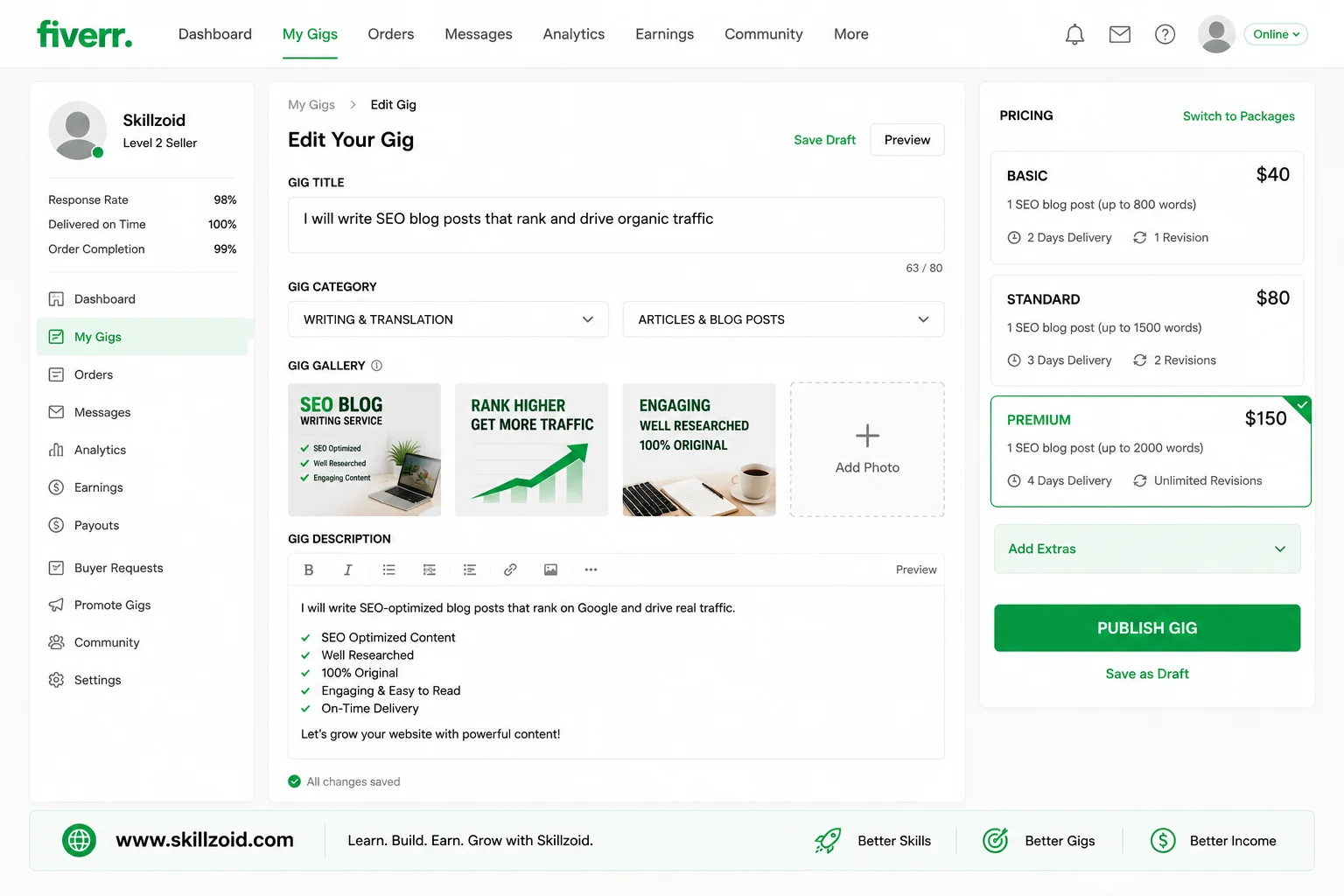
The best case is that you get a message from a buyer in week four asking if you can handle their project, and the answer, after 30 days of real practice, is yes.
Disclaimer
The timeline estimates in this article are based on personal experience and general learning patterns, not guarantees. Individual results will vary based on prior experience, time invested, and the consistency of practice.
If you want to learn how to earn money on Fiverr, read this guide: How to Earn Passive Income as a Fiverr Affiliate in 2026 (Complete Guide).
Taha Sohail is a professional blogger and cyber engineer who has learned and applied multiple digital skills in the context of freelancing. He writes practical, experience-based guides for people building online income without shortcuts or inflated promises.




3 Comments on “Best Fiverr Skills Beginners Can Learn in 30 Days”