
Disclaimer: This post is for educational purposes only. It does not contain affiliate links. All information is based on personal experience and research. I have no financial relationship with any platform or service mentioned in this article.
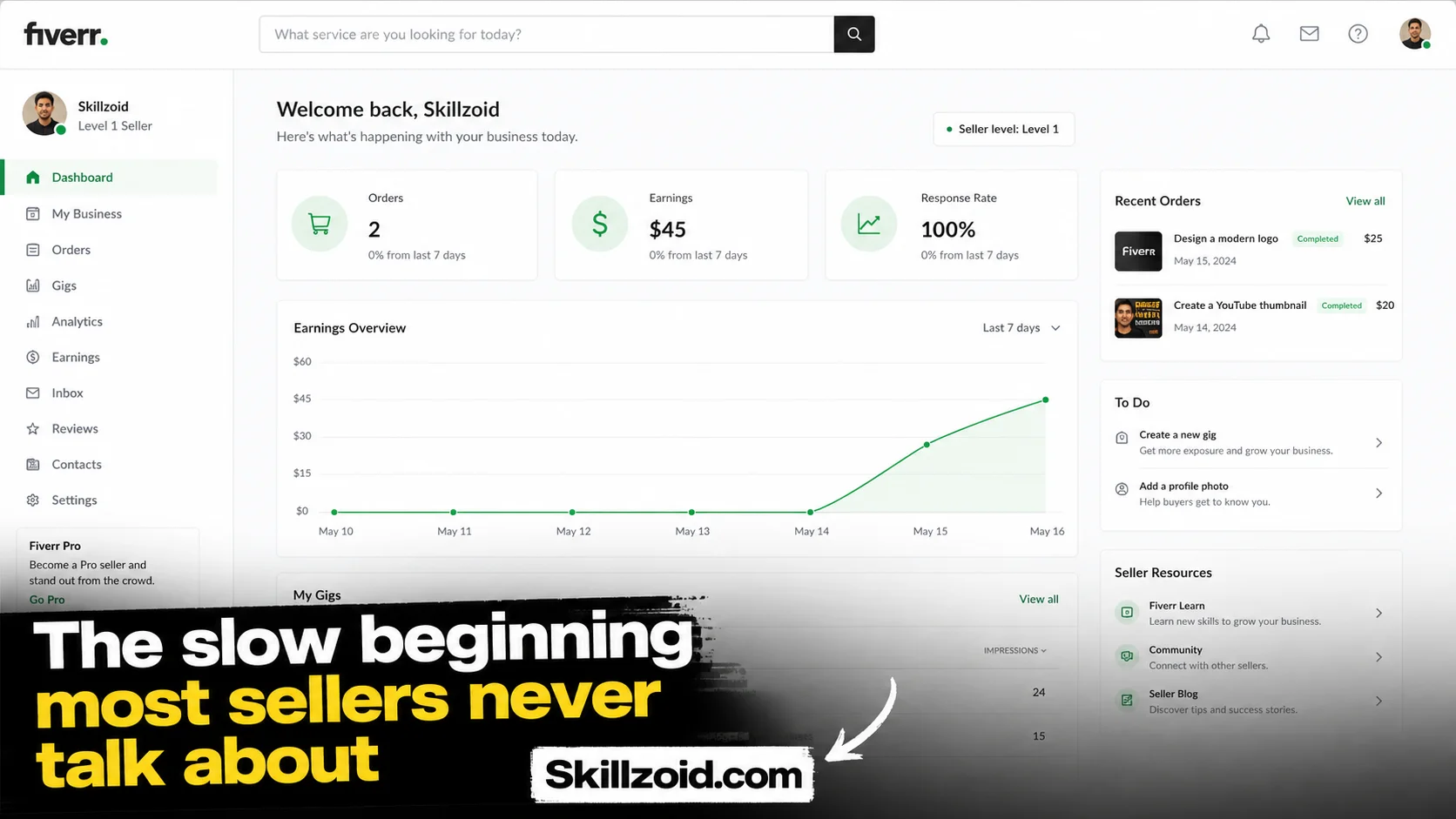
There was a point where I was refreshing my Fiverr inbox every twenty minutes, hoping for a new order notification.
Not because things were going well, because they weren’t. I had been on the platform for almost three months, had two completed orders, and was seriously wondering if the people writing “I make $3,000 a month on Fiverr” on YouTube were just making it up.
They weren’t making it up. But they also weren’t telling the whole story.
What nobody explains clearly is that Fiverr has two completely different experiences depending on how you approach it. One group of sellers waits around hoping the algorithm sends them buyers. The other group treats it like an actual business, and those are the people building full-time incomes.
I figured out which group I wanted to be in, made some painful adjustments, and things slowly started changing. This article is everything I wish someone had laid out for me during those early, frustrating months.
The biggest misconception about making money on Fiverr
Most people who fail on Fiverr fail for one reason: they think creating a gig is enough.
You create the gig, fill out the description, upload a thumbnail, set your price, and then sit back waiting for orders to roll in. That’s what Fiverr’s setup process makes it feel like, that the platform will just send you buyers.
It won’t. Not at first. Not without help.
Fiverr’s search algorithm is heavily weighted toward sellers with order history, reviews, and engagement. New sellers sit at the bottom of search results by default. If you’re waiting for organic discovery to kick in during your first few months, you’re going to be waiting a long time.
The sellers who start earning quickly are the ones who don’t wait. They drive their own initial traction, and then the algorithm catches up and starts rewarding them.
Keep that in mind as you read through everything below.
Step 1: Choose a skill you can actually deliver at a high level
This sounds obvious, but it’s where a lot of people quietly go wrong.
They pick a service based on what they think sells: graphic design, SEO, and copywriting, without honestly asking whether they can deliver quality work consistently at speed.
Fiverr rewards sellers who complete orders on time, get five-star reviews, and have low cancellation rates. If you’re offering a service you’re only average at, you’ll struggle to get those reviews. And without strong reviews, you don’t grow.
Pick something you’re genuinely good at. It doesn’t have to be the most glamorous skill. Data entry, transcription, PDF formatting, social media scheduling, email template setup, these aren’t exciting, but they’re services people need constantly, and a seller who does them reliably and quickly can build a stable income from them.
I’ve seen sellers earning a consistent $2,000 to $3,000 a month from basic services that “gurus” would dismiss as too simple. Reliable beats impressive every single time when you’re starting.
Step 2: Build a gig that actually communicates value
Your gig page is essentially your storefront. Most new sellers write gig descriptions that explain what they do. The ones who convert write descriptions that explain what the buyer gets.
There’s a real difference.
“I will write SEO blog posts of 1,000 words,” tells the buyer what you do.
“I will write an SEO-optimized blog post that ranks in Google and keeps your readers engaged, delivered in 48 hours with unlimited revisions until you’re happy,” tells them what they get.
Buyers are coming to Fiverr because they have a problem and they want it solved. Your gig description should speak to that problem directly and make it obvious that you’re the person who can solve it.

A few specific things that helped my gig performance:
The title matters more than you think. Use natural language that matches what buyers actually search. Don’t stuff it with keywords; Fiverr’s algorithm has gotten good at detecting that, and it looks untrustworthy to buyers, too.
Your gig thumbnail is the first impression. Spend an hour on Canva making something clean and professional. Look at the top sellers in your category and notice what their thumbnails have in common: usually clear text, high contrast, and minimal clutter. Don’t copy them, but understand the standard.
Set a competitive price to start. Not dirt cheap, that actually signals low quality, but competitive enough that a buyer who doesn’t know you yet takes a chance. You can raise prices once you have reviews.
Step 3: Get your first five reviews by any means necessary (ethically)
Your first five reviews are disproportionately important. They’re the difference between a buyer choosing you over a seller with dozens of reviews.
Here’s what I did, and what I’ve seen other sellers do effectively:
Offer your service to people in your existing network. Friends, family, former colleagues, people in Facebook or WhatsApp groups you’re already part of. Let them know you’ve started freelancing and offer them a good deal in exchange for honest feedback. Make sure they’re genuine orders placed through Fiverr; fake reviews violate Fiverr’s terms and will get you permanently banned.
Another approach: price your first few gigs slightly below what you’ll eventually charge. Not free, people don’t value what they don’t pay for, but accessible enough that the risk feels low for a new buyer.
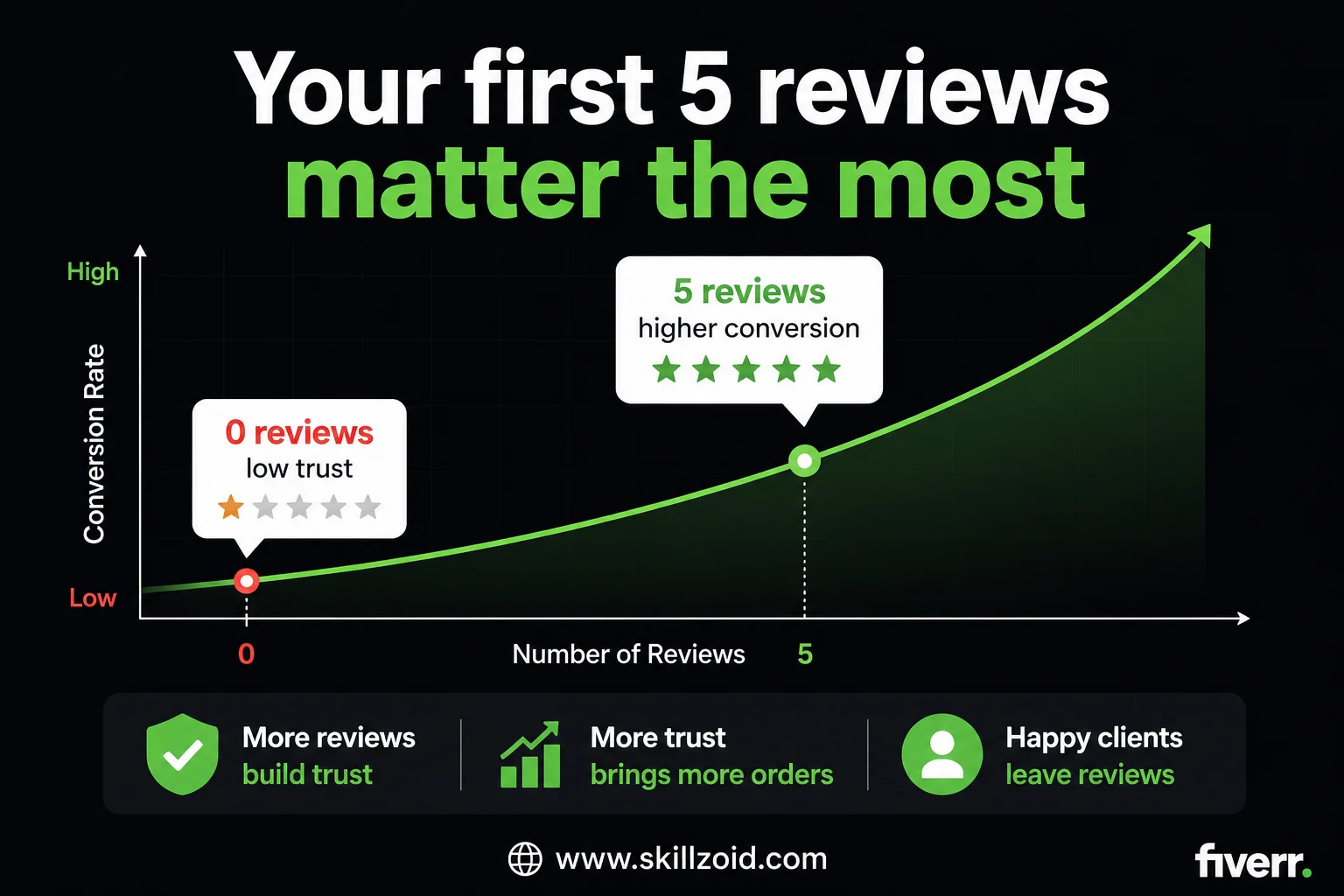
Once you have five solid reviews with detailed feedback, your conversion rate from profile visits will jump noticeably. It’s one of the most reliable patterns in Fiverr selling.
Step 4: Stay active on the platform every single day
Fiverr’s algorithm monitors seller activity. Sellers who log in regularly, respond to messages quickly, and stay engaged tend to get better placement in search results than sellers who are sporadic.
Response time is one of the metrics Fiverr tracks visibly on your profile. Buyers see it. A response time of “within an hour” builds more confidence than “within a day,” even if your work quality is identical.
When I was growing my profile, I had Fiverr’s app notifications turned on at all times. Any time someone sent a message, I responded within minutes if I was awake. That single habit pushed my response rate to 100% and helped me maintain Top Rated Seller status once I hit it.
You don’t have to be glued to your phone. But treat new messages the way you’d treat a message from a boss, promptly.
Step 5: Over-deliver on every order until you hit Level 2
This sounds like standard advice, but I want to be specific about what “over-delivering” actually means in practice.
It doesn’t mean doing double the work for free. It means delivering slightly more than what was promised in a way that surprises the buyer positively.
If you’re a logo designer, include an extra color variation they didn’t ask for.
If you’re a writer, add a suggested meta description at the end of the article.
If you’re a video editor, deliver the file in two formats instead of one.
These are small things that cost you maybe ten extra minutes. But they’re the things buyers mention in reviews. “She delivered more than I expected” is a five-star review waiting to happen, and those detailed positive reviews are what separate the sellers who plateau at Level 1 from the ones who keep growing.
Step 6: Raise your prices deliberately as your reviews grow
This is a step most sellers skip, and it’s one of the reasons they burn out.
If you’re charging $10 for work that takes you two hours, you’re earning $5 an hour. That’s not a business, that’s exhausting yourself for pocket money.
Every time you hit a milestone, 10 reviews, 25 reviews, Level 1, Level 2, revisit your pricing. Raise it by a meaningful amount. Some buyers will drop off. That’s fine. The ones who stay are paying you what your work is actually worth, and you’ll likely find your order volume stays roughly the same while your income goes up.
The goal isn’t to have the most orders on Fiverr. The goal is to earn a full-time income without working yourself into the ground.
Step 7: Add gig packages and upsells once you have traction
Fiverr allows you to offer Basic, Standard, and Premium packages on most gig types. Once you have a steady stream of orders, this is where your income can jump significantly without you doing more work.
A buyer who came looking for the Basic $25 package might upgrade to the $75 Standard when they see what it includes. The buyer who already trusts you is far more likely to spend more than a new buyer, and you didn’t have to acquire them twice.
Think carefully about what genuinely differentiates each tier. Don’t just offer “more revisions” at the higher level; offer a meaningfully better outcome. Faster delivery, more comprehensive scope, priority communication. Make the upgrade feel like a real upgrade, not a pricing trick.
The mistakes that set me back
Offering too many services at once. When I started, I had five different gigs: writing, social media, research, data entry, and basic design. None of them got traction because my profile looked unfocused. I cut everything down to two related gigs, and things improved within a month.
Taking orders, I wasn’t confident about. Early on, I accepted a few orders for services I’d stretched the truth about in my skill level. The results were mediocre, the reviews were lukewarm, and the damage to my profile took months to recover from. If a buyer asks for something outside your genuine expertise, it’s better to politely decline than to deliver something average.
Ignoring the buyer’s brief. Some buyers send detailed requirements in their order form or initial message. I skimmed these early on and got it wrong more than once. Now I read every brief carefully before starting and ask one or two clarifying questions if anything is unclear. This alone reduced my revision requests dramatically.
Not asking for reviews. This one still surprises me. Many buyers are happy with their order, but won’t leave a review unless you gently remind them. After delivery, I’d include a short, natural note: “I really enjoyed working on this. If you’re happy with the result, a quick review would mean a lot.” Most satisfied buyers will follow through when asked.
What “full-time income” realistically looks like on Fiverr
Let me be honest about the numbers because there’s a lot of unrealistic content out there.
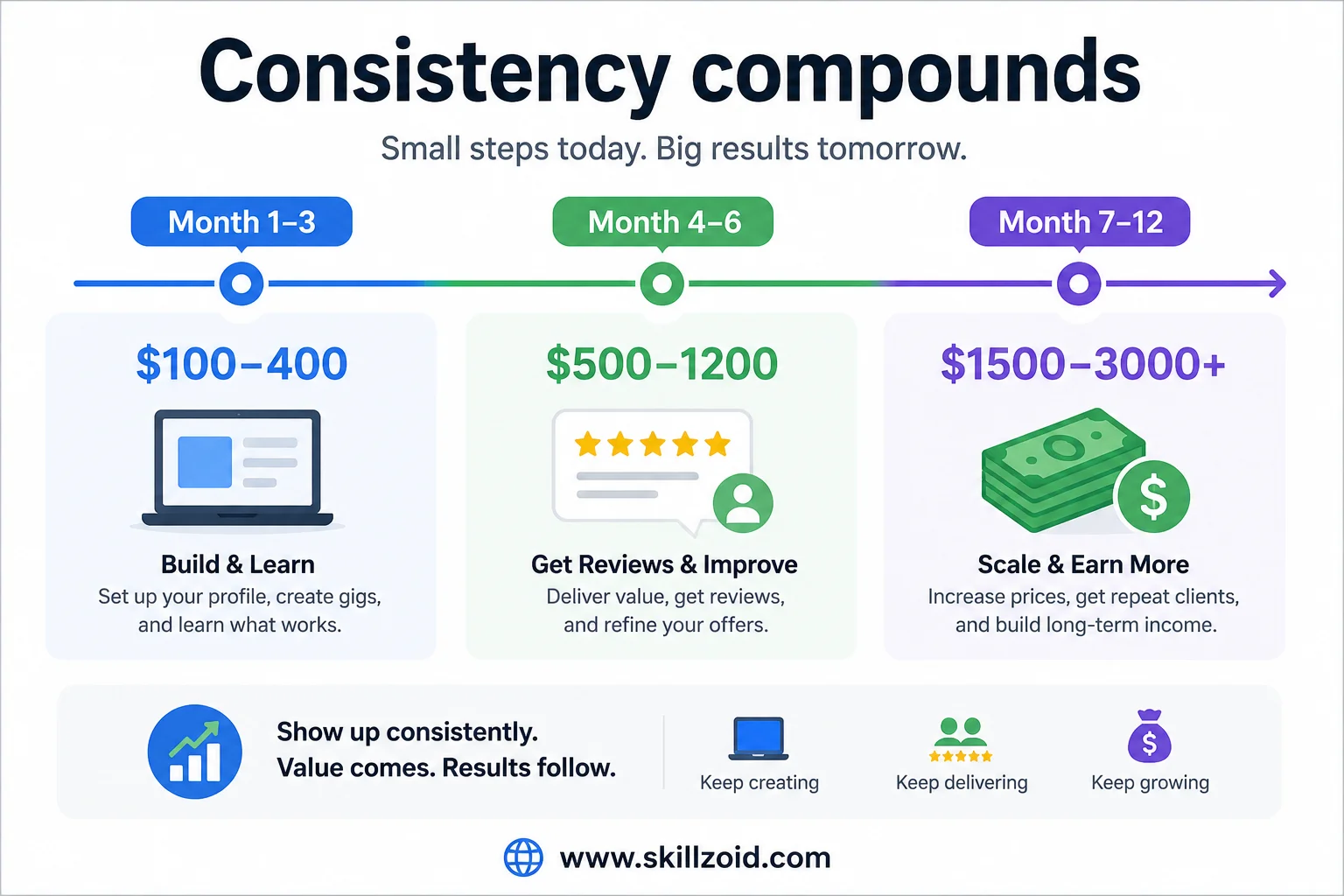
Most sellers who reach a stable full-time income on Fiverr take six to eighteen months to get there. Not weeks. The early months are about building your profile, collecting reviews, and figuring out which services and packages work best for your skill set.
What’s realistic for a seller who’s serious and consistent:
- Months 1 to 3: a few orders, $100 to $400 total, learning the platform.
- Months 4 to 6: growing order volume, $500 to $1,200/month possible.
- Months 7 to 12: With strong reviews and good gig positioning, $1,500 to $3,000+ per month becomes achievable.
These aren’t guarantees; they depend heavily on your niche, your skill level, your pricing, and how much effort you put into the steps above. But they’re realistic for someone who approaches this with the discipline of an actual business owner rather than a passive side hustle.
The sellers I’ve seen fail almost always made the same choice at some point: they treated Fiverr as a lottery ticket instead of a job. The ones who succeed treated every single order like it mattered, because early on, it did.
One last thing
If you’re at the stage I was in, refreshing your inbox, wondering if this actually works, don’t make any decisions based on the first three months alone. Three months is still the beginning.
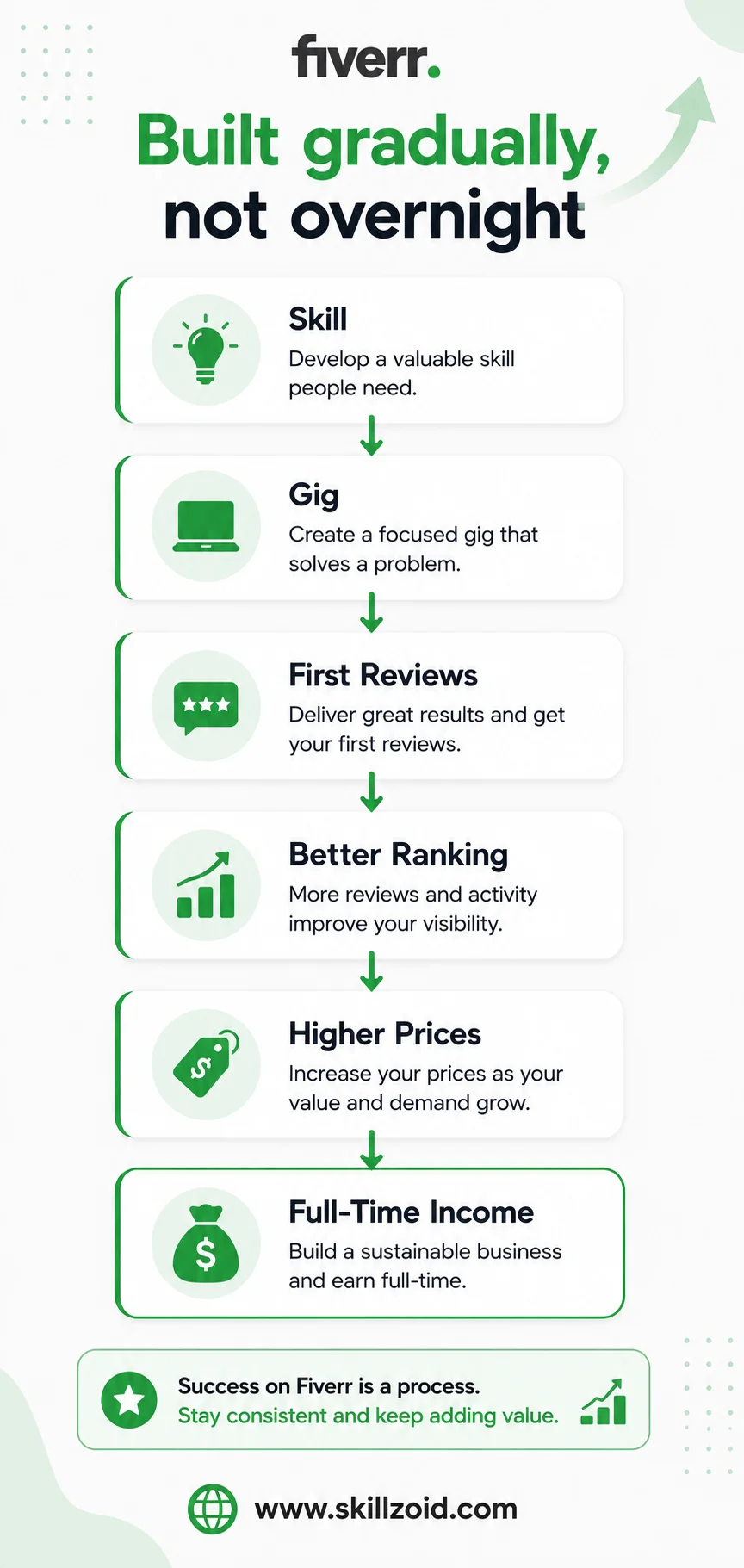
Focus on quality, respond fast, deliver more than expected, and be honest about what you can do. Those four things, done consistently, will take you further on Fiverr than any hack or shortcut you’ll find online.
Taha Sohail is a blogger and cyber engineer who writes about freelancing, online earning, and digital skills at Skillzoid.com.
Related reading: Best Fiverr Skills Beginners Can Learn in 30 Days | How to Write a Fiverr Gig Description That Gets Orders




5 Comments on “How to Build a Full-Time Income on Fiverr in 2026”