
Disclaimer: This post is for educational purposes only. It does not contain affiliate links. All information is based on personal experience and research. I have no financial relationship with any platform or service mentioned in this article.
The first time I made money from a Fiverr affiliate link, I hadn’t even tried that hard.
I had written a short blog post about how I got a logo designed for my website without spending much. At the end, I mentioned Fiverr and dropped my affiliate link almost as an afterthought. Two weeks later, I checked my affiliate dashboard, three conversions, $75 earned.
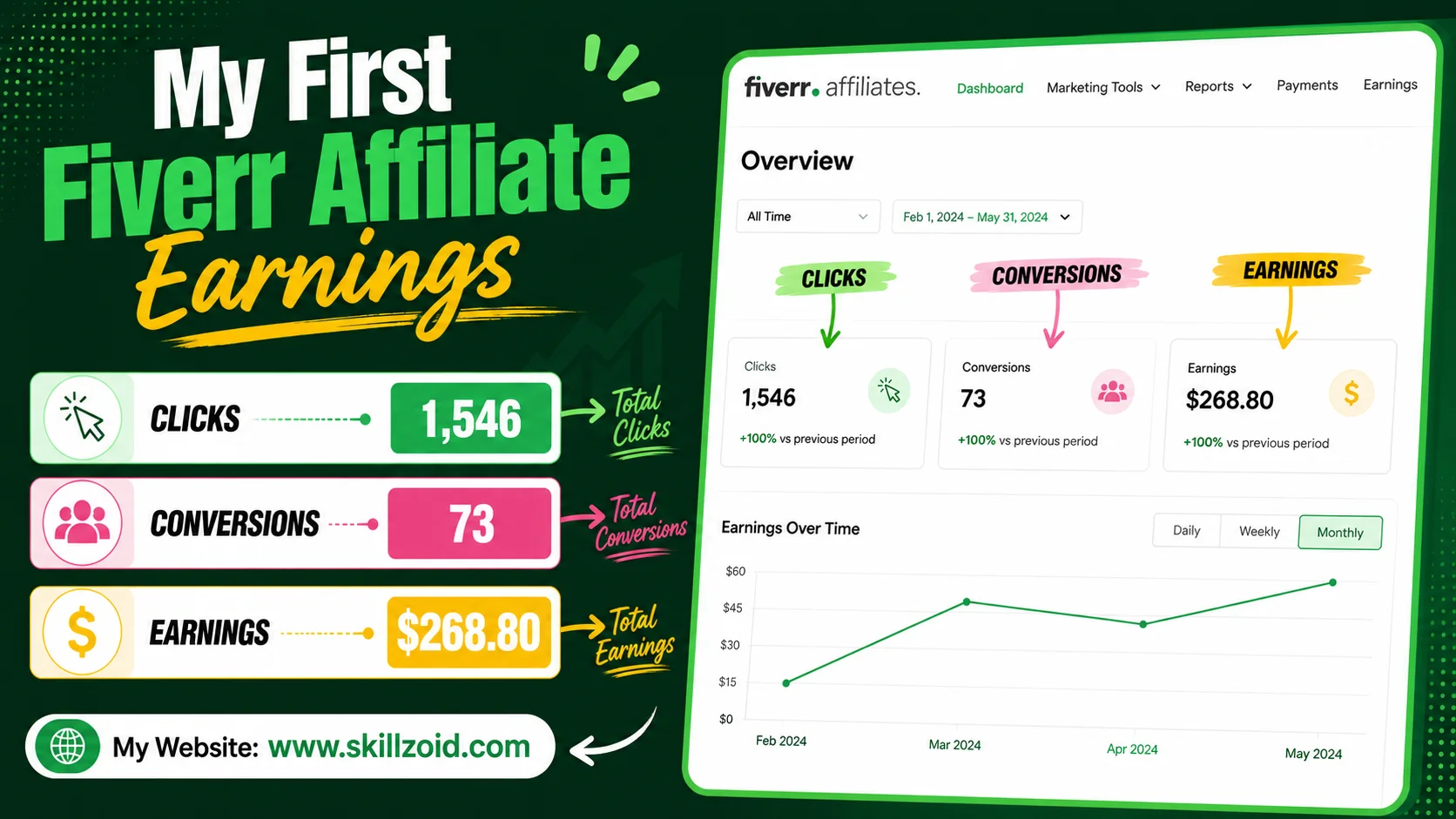
That got my attention.
But here’s the part nobody tells you upfront: the next two months were almost completely dry. Same effort, way fewer results. I had to figure out what worked that first time and why most of my other attempts flopped.
What I learned changed how I approach affiliate marketing entirely, not just for Fiverr, but for anything. And if you’re trying to promote Fiverr affiliate links and actually earn from them in 2026, I want to save you the two months of confusion I went through.
Why Fiverr is actually a solid affiliate program to promote
Before getting into the how, it helps to understand why Fiverr works well as an affiliate product, because not every affiliate program is worth your time.
Fiverr pays a flat CPA (cost per acquisition), meaning you earn a fixed commission when someone who has never bought on Fiverr before clicks your link and makes their first purchase. The commission ranges from $15 to $150, depending on the service category. You don’t need them to spend a lot, just to buy something for the first time.
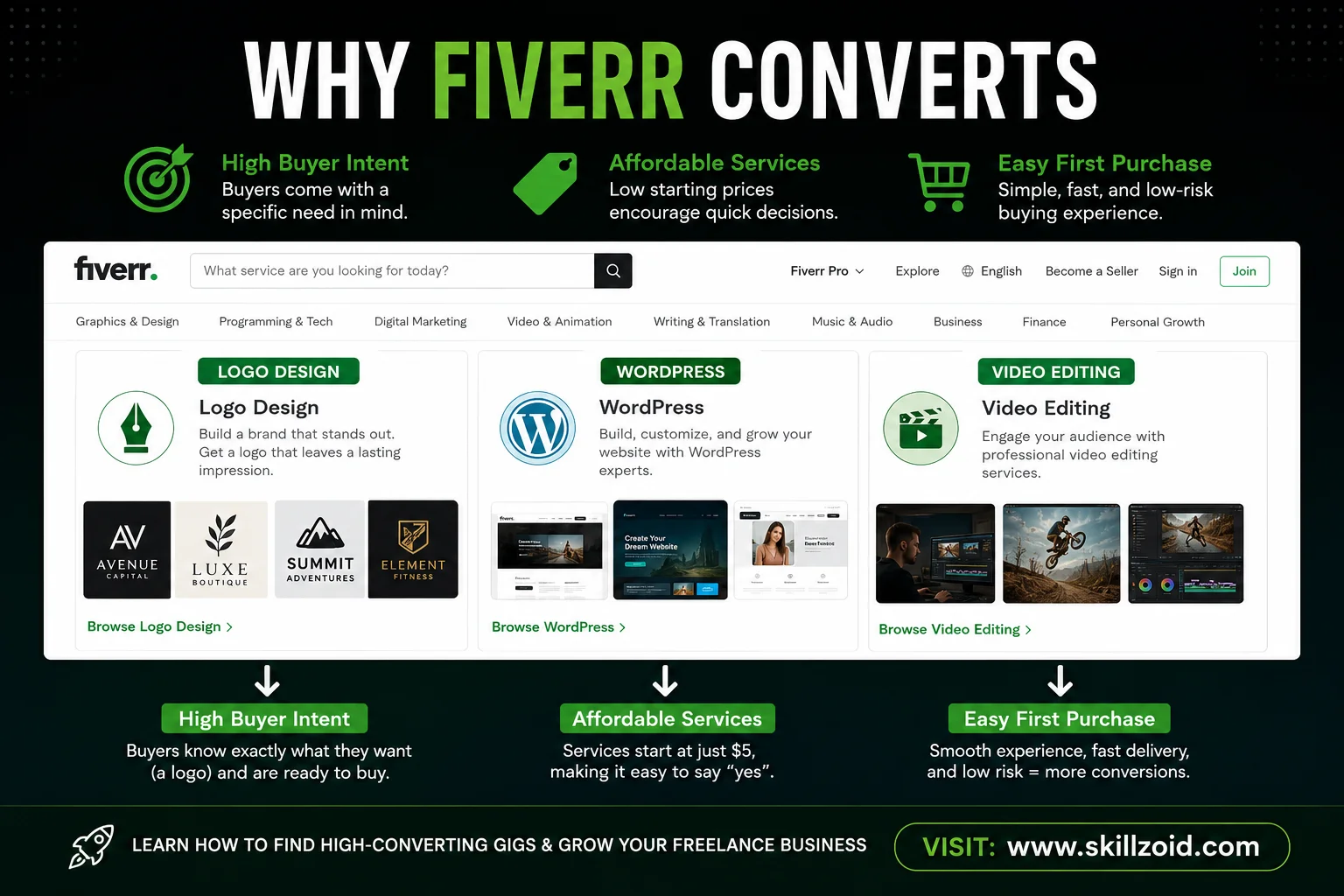
That’s actually a generous structure. Compare it to programs that pay 3% of a $12 sale, and you’ll see why Fiverr is worth promoting properly.
The other thing that helps: Fiverr has genuine brand recognition. You’re not trying to convince someone to trust an unknown website. Most people have at least heard of Fiverr, which removes a huge chunk of the skepticism you’d face promoting a lesser-known platform.
The method that actually worked for me, content with real context
Here’s the truth about affiliate marketing that most “make money online” videos skip over: people don’t click affiliate links just because they saw one. They click because they were already looking for a solution, and your content showed up at the right moment.
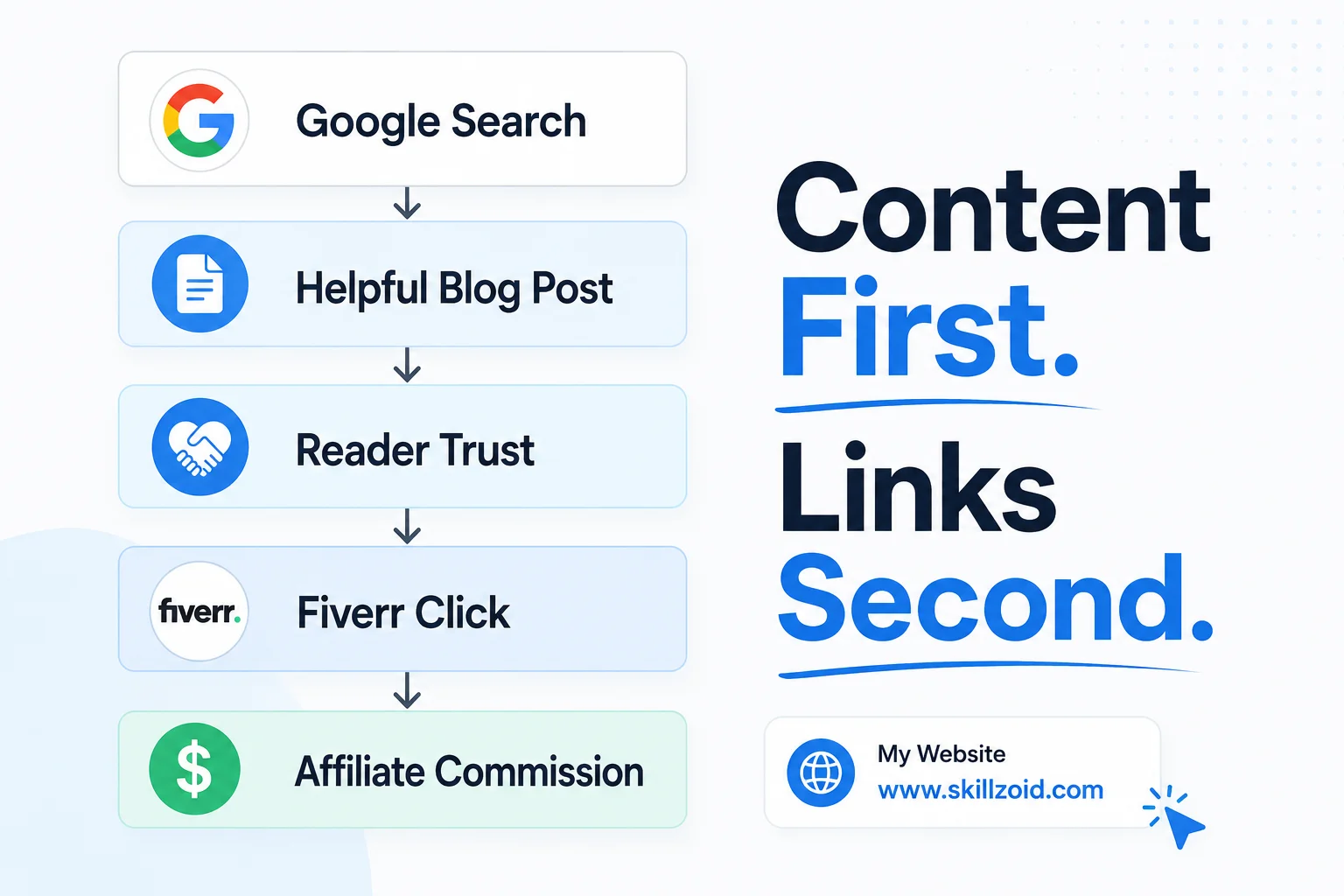
The logo blog post I mentioned earlier worked because someone Googled “where to get a cheap logo for my blog,” found my article, read about my experience, and decided to try Fiverr. The link was just the last step. The content did all the work.
So the question isn’t “how do I get more people to click my link?” The real question is: “How do I create content that reaches people who are already looking for what Fiverr offers?”
That shift in thinking is everything.
Platform 1: A blog or website (the most sustainable method)
If you have a blog, even a small one, this is your best long-term channel for Fiverr affiliate income.
The key is writing content that targets people in the research or decision phase, not people who are just casually browsing. Think about what someone types into Google right before they’d need a Fiverr service:
- “How to get a logo made without a designer.”
- “affordable video editing for YouTube beginners”
- “Where to find a voiceover artist for my podcast?”
- “How to fix my WordPress website without coding.”
These are people who are one step away from pulling out their card. Your article shows up, explains their options, mentions Fiverr as a practical solution, and your affiliate link is there when they’re ready.
The articles that convert best for me are not “Top 10 Fiverr Gigs” listicles. Those are everywhere, and they feel like ads. What converts is a specific, experience-based post about a real problem and how Fiverr helped solve it, or could solve it.
Write like you’re explaining something to a friend, not selling something to a stranger.
Platform 2: YouTube (underused and highly effective)
A lot of Fiverr affiliate marketers ignore YouTube because it feels like more work. That’s actually an opportunity; less competition in video means more visibility for you.
You don’t need a professional setup. A decent phone camera, natural light from a window, and a clean background are enough to start.
The videos that work well for Fiverr affiliate promotion are:
Tutorial-style videos. Something like “how I got my YouTube channel art designed on a budget” or “I hired a Fiverr editor for my videos, here’s what happened.” Real, specific, story-based.
Comparison videos. “Hiring a freelancer on Fiverr vs doing it yourself”, this one works particularly well because it speaks to a decision people are actively making.
Process walkthroughs. Show someone actually browsing Fiverr, filtering sellers, reading reviews, and placing an order. Many first-time buyers are hesitant because they don’t know how it works. A walkthrough video removes that hesitation, and your affiliate link in the description captures the click.
Put your affiliate link in the video description with a clear, simple line like: “Find freelancers for your project on Fiverr: [your link].” No pressure, no hype.
Platform 3: Pinterest (seriously, don’t overlook this)
Pinterest is often dismissed as a platform for recipes and home decor, but it quietly drives significant affiliate traffic for bloggers in the freelancing, business, and side-income spaces.
Pinterest works more like a search engine than a social network. People search for ideas, solutions, and guides, and a well-made pin can drive traffic for months or years, unlike an Instagram post that disappears in 48 hours.
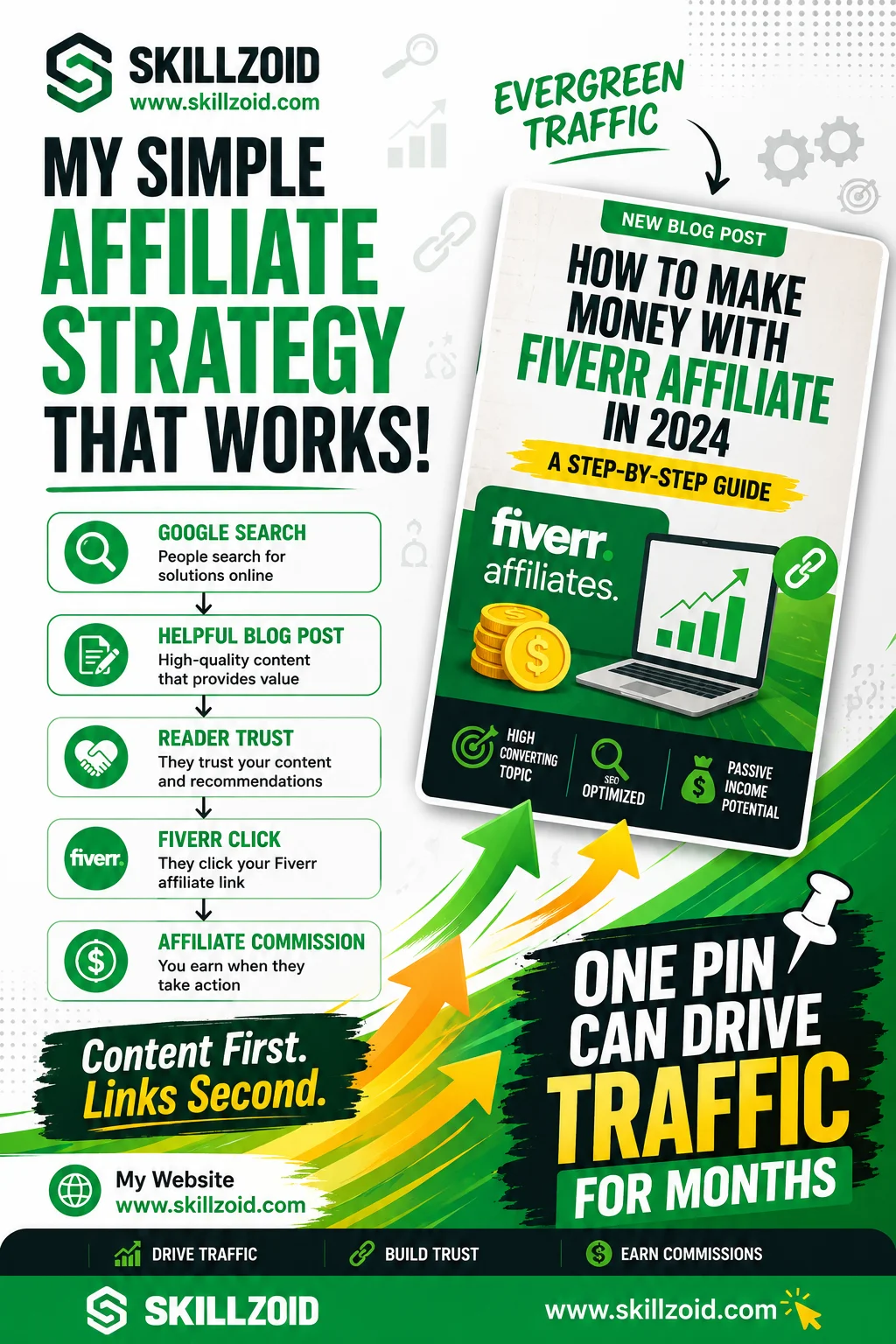
Create pins that link back to your blog posts about Fiverr services. Use Canva to make clean, readable graphics. Titles like “5 Things I Outsourced on Fiverr That Saved Me 10 Hours a Week” or “How I Got My Brand Designed for Under $50” work well because they’re specific and curiosity-driven.
I set up about 12 pins in one afternoon, and some of them still bring in clicks a year later without any additional effort.
Platform 4: Facebook Groups (the right way, not the spammy way)
Facebook Groups get a bad reputation in affiliate marketing because most people use them incorrectly. They drop links, post “check this out!” messages, and wonder why nobody clicks.
The right approach is the opposite. Find groups where your target audience already hangs out, such as small business owners, content creators, bloggers, Etsy sellers, and real estate agents. These people regularly need the kinds of services Fiverr offers.
Don’t post affiliate links in the group. Instead, answer questions. When someone asks, “Where can I find a good logo designer that doesn’t cost a fortune?”, write a genuine, helpful reply about your experience with Fiverr. Then say something like “I wrote a full post about how I find reliable sellers there, links in my profile if you’re curious.”
That approach gets people to your content voluntarily, and your affiliate link is there when they arrive. It builds trust instead of burning it.
Platform 5: Email newsletters (if you already have a list)
If you have any kind of email list, even a small one of a few hundred people, this is worth trying.
You don’t need a dedicated “Fiverr promo” email. In fact, those rarely work. What works better is mentioning Fiverr naturally inside a newsletter that’s already about something useful.
If you’re writing about “how I set up my new website,” mention that you hired a Fiverr developer to handle a specific task. Include your link in context. Readers who trust you will click because the recommendation came from someone they already follow, not from an ad.
The mistakes that slowed me down early on
Promoting to the wrong audience. I once wrote a post about Fiverr affiliate marketing targeted at complete beginners who had no business or project in mind. Nobody clicked because nobody had anything to buy. The people who buy on Fiverr are people who have a specific need right now. Your content needs to reach them, not a general audience.
Linking to the Fiverr homepage. For a long time, I linked directly to fiverr.com. I should have been linking to category pages or search results for specific services. When someone lands on the Fiverr homepage with no context, they often bounce. When they land on a filtered search page showing exactly the type of service they need, they stay and browse.
Giving up after one dry week. Affiliate marketing has a lag. Someone might click your link today and not buy until next week. Fiverr tracks the cookie for 30 days, so clicks you got two weeks ago can still convert today. I almost quit after a slow week, not realizing conversions from that week were still coming in.
Writing too generically. The posts that flopped were the broad ones, “best services on Fiverr” with no specific angle. The posts that earned were the specific ones: “I needed a podcast intro designed, here’s exactly what I found on Fiverr and what it cost me.”
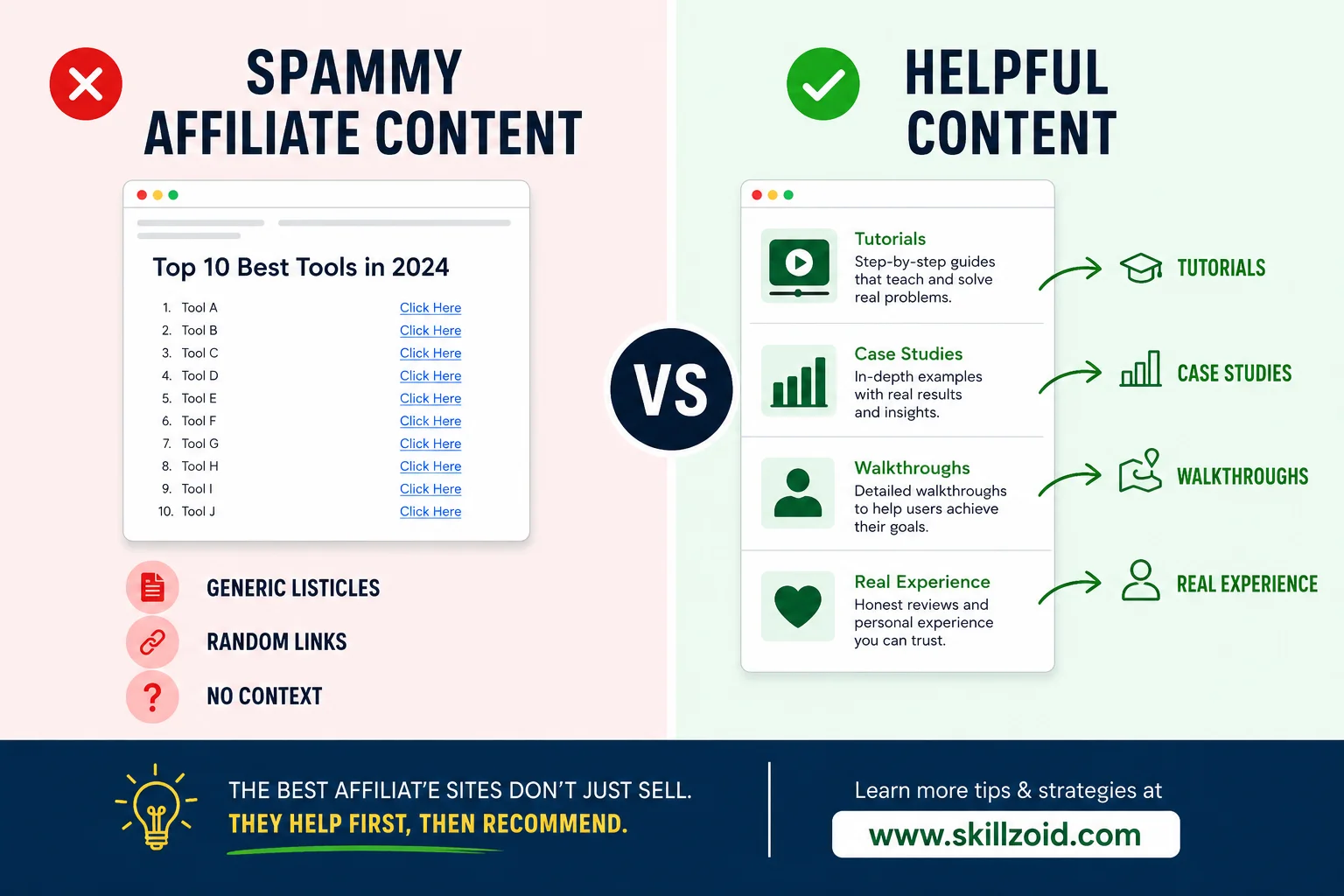
Specific beats generic every single time.
A realistic picture of what to expect
I want to be straightforward here because there’s too much hype around affiliate marketing income.
In your first month, if you’re building from scratch, you might earn nothing. That’s normal. The content needs time to rank, get shared, and reach the right people.
By month two or three, if you’re publishing consistently and targeting the right search intent, you should start seeing your first handful of conversions.
By the six-month mark, with a small library of well-targeted content, Fiverr affiliate commissions can become a reliable side income. I’m not talking about replacing a salary overnight, but $200 to $500 a month from affiliate links alone is genuinely achievable for someone who takes this seriously and doesn’t cut corners on content quality.
The people who fail at this almost always make the same mistake: they focus on the links instead of the content. The links are just a mechanism. Good, honest, helpful content is the actual product you’re building.
Where to start if you’re just getting going
Sign up for the Fiverr affiliate program; it’s free and straightforward. Then pick one platform where you already spend time or already have a small audience. Write or record one genuinely helpful piece of content about a specific Fiverr-related topic. Add your link in context. Publish it. See what happens.
Then do it again.
That’s really the whole strategy. It’s not complicated; it just requires patience and a commitment to being actually useful instead of just promotional.
If you want to learn about ranking your gig on Fiverr, read this guide: How to Rank a Gig on the First Page on Fiverr in 2026.
Taha Sohail is a blogger and cyber engineer who writes about freelancing, online earning, and digital skills at Skillzoid.com.