
The first offer I ever sent on Fiverr‘s Buyer Requests took me four minutes to write.
I copied a template I had found on YouTube, swapped in my name and service, and hit send. Easy. I did the same for the next six offers that week. Same template, slightly different wording each time.
Zero responses. Not one.
The following week, I ran out of patience and actually read through the buyer requests properly, not to find ones to apply to, but just to understand what buyers were actually posting. And something became immediately obvious that I had completely missed before.
These were not job listings. They were people describing a problem they had, often in very specific terms, sometimes with obvious frustration. One buyer wrote something like: “I need someone who actually understands network security, not just someone who can Google the topic and rewrite Wikipedia.” Another said, “Please read my request before sending a copy-pasted pitch. I will ignore anything that looks templated.”
That second one hit differently when I realised that was exactly what I had been doing.
I rewrote my entire approach from scratch. The first offer I sent under the new method got a response within three hours. The second one converted into a paid order. By the end of that month, my acceptance rate had gone from essentially zero to roughly one in five, which, in a competitive category, is genuinely good.
Here is everything I changed.
First, Understand What You Are Actually Competing Against
Before getting into how to write a good offer, it helps to know what most offers look like from the buyer’s side.
Buyers posting in the Requests section receive anywhere from 10 to 50+ seller offers, depending on how popular their category is. The overwhelming majority of those offers are:
- Copy-pasted templates with the seller’s name dropped in
- Generic pitches that do not reference anything the buyer wrote
- Lists of the seller’s credentials that have nothing to do with the specific project
- Offers that start with “Hi, I am a professional [X] with [Y] years of experience”
Buyers have seen all of this before. They scroll past it reflexively at this point. Your offer does not need to be perfect; it just needs to be clearly different from that pile.
The bar is genuinely lower than it sounds. Most of your competition is actively helping you by being so forgettable.
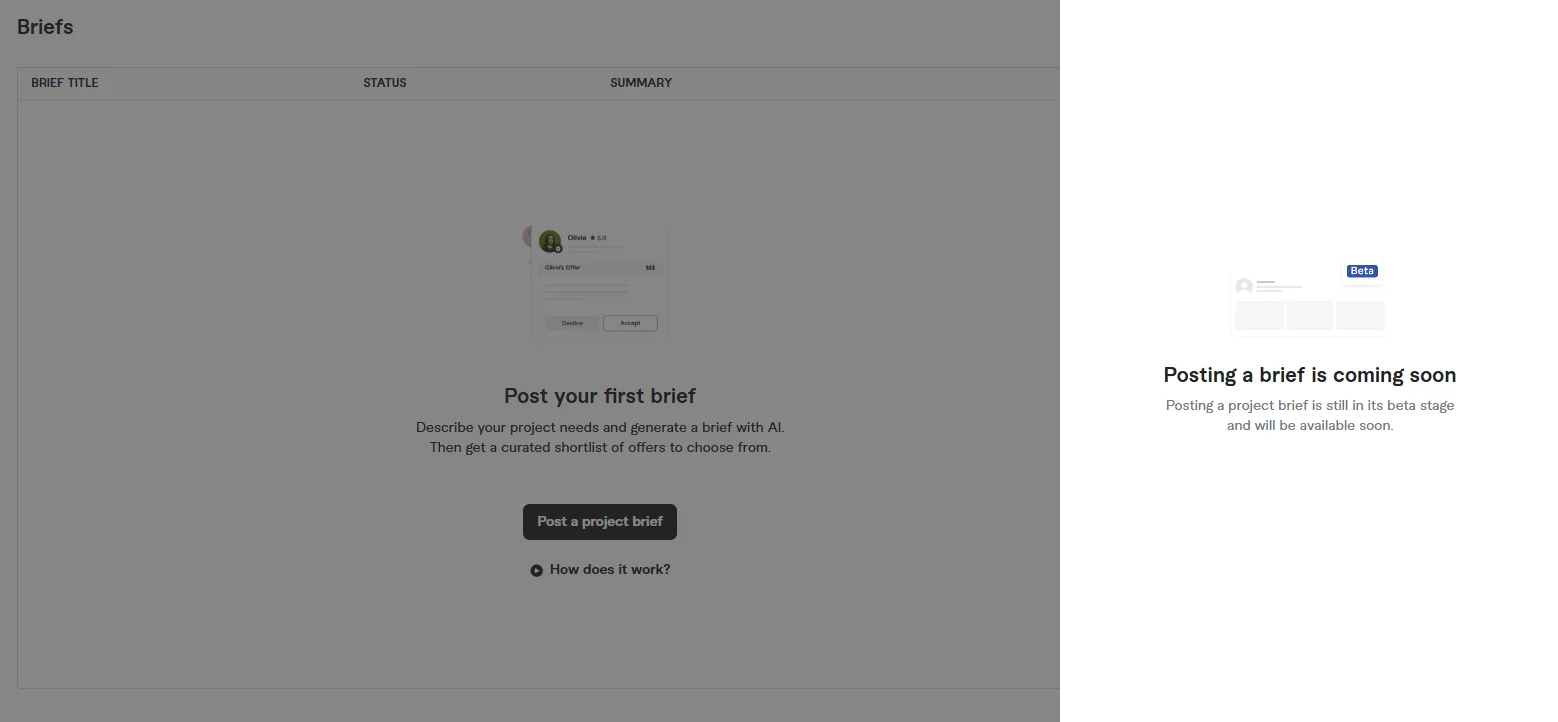
Example of Fiverr’s evolving “Briefs” feature, which is gradually replacing Buyer Requests for some users.
The Structure That Actually Gets Responses
Every offer I send now follows a loose four-part structure. It is not a rigid template; the content changes completely for every request, but the shape stays consistent because it works.
Part 1: Prove You Read the Request (First Two Lines)
Your opening lines have one job: show the buyer that you actually read what they wrote and understood their specific situation.
Do not open with your name. Do not open with your experience. Do not open with “Hi, I came across your request.”
Open with something that could only have been written by someone who read their post carefully.
If a buyer posted: “I need a 1,000-word article about zero-trust network security for a non-technical audience, my readers are small business owners, not IT professionals.”
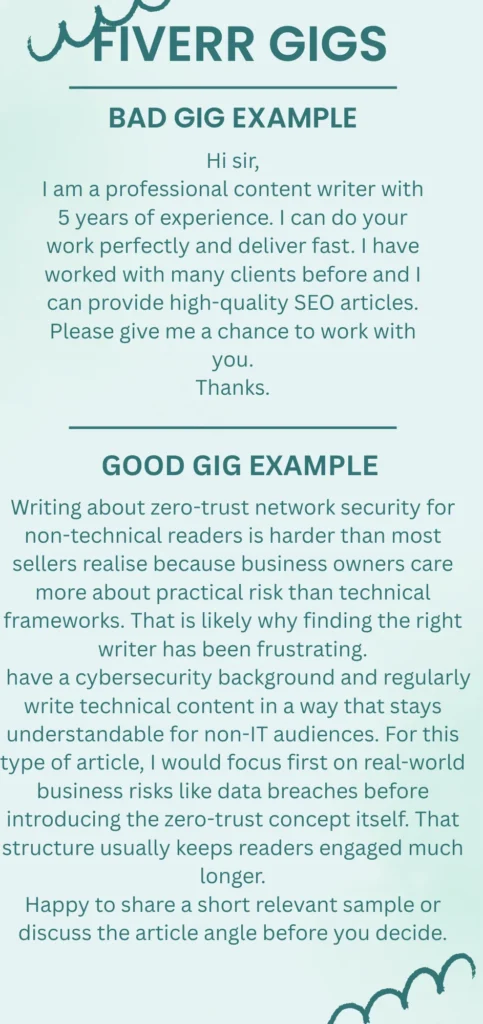
A bad opening: “Hi, I am Taha, a professional content writer with five years of experience in SEO and technical writing. I can help you with your project.”
A good opening: “Writing about zero-trust security for non-technical readers is a specific challenge; most content in that space is written for IT teams, not the business owners who actually need to implement it. That gap is exactly what I focus on.”
The good opening tells the buyer: you understood the nuance of what they asked for. That is the entire point of the first two lines. Everything else follows from there.
Part 2: One Specific Credential That Is Directly Relevant
Not a list of everything you can do. One thing that connects directly to their project.
If they need cybersecurity content, mention your engineering background. If they need e-commerce copy, mention a specific e-commerce client you have written for. If they need video editing for YouTube, mention a specific channel niche you have worked in.
One specific, relevant credential is ten times more persuasive than five generic ones. It shows you are not just a writer or a designer in general, you are someone who has done this specific type of work before.
If you genuinely do not have a directly relevant credential yet, do not fabricate one. Instead, briefly explain why you understand the topic, your own experience, your study background, or a project you did for yourself. Honesty reads better than vague claims.
Part 3: A Short Answer to Their Core Problem
This is the part most sellers skip entirely, and it is where offers actually get noticed.
Give the buyer a small, useful insight about their project, something that demonstrates you know the topic, not just the service.
For the zero-trust security example, this might be: “One thing that tends to work well for non-technical audiences on this topic is anchoring the explanation in a business risk they already understand, like what happens after a data breach, before getting into the technical framework. That approach tends to keep business owners reading past the first paragraph.”
That single observation costs you nothing to share. But to the buyer, it signals that you are not just capable of writing the article, you have already been thinking about how to make it good. That is a qualitatively different kind of seller.
Part 4: A Clean, Low-Pressure Close
End with something that invites a conversation without creating pressure.
“Happy to share a short sample or answer any questions before you decide, just let me know.”
That is it. No “I look forward to hearing from you.” No “Please consider my offer.” No exclamation marks. A calm, confident close that puts the decision in their hands without desperation.
Practical Tips That Changed My Results
Match your offer length to the request complexity. A buyer asking for a simple 300-word product description does not need a five-paragraph offer. Three or four sentences are appropriate. A buyer asking for a complex ongoing content project deserves a more detailed response. Misjudging this reads as either lazy or tone-deaf.
Use their words, not your words. If the buyer described their audience as “everyday people who hate jargon,” use that exact phrase in your offer somewhere. It is a subtle signal that you read carefully and understood their framing. Buyers notice this even when they cannot articulate why one offer felt more relevant than another.
Send offers in the morning. Buyer Requests are time-sensitive. Buyers often hire from the first batch of offers they receive, which means being among the first to respond matters. Check the Requests section early, especially between 7 and 10 AM in your time zone, when new posts from US and European buyers from the previous evening are fresh and have fewer responses.
Do not mention your price in the opening. Lead with value first. Buyers who are impressed by your offer will look at your custom offer price and evaluate it in that context. Buyers who see your price first evaluate everything else through a cost lens. Price is a detail; lead with understanding.
Send a custom offer with a specific price. Once a buyer responds positively to your message, send them a Custom Offer through Fiverr’s messaging system rather than asking them to order directly from your gig packages. Custom offers allow you to price the project accurately for their specific scope and show the buyer you are treating their project as an individual thing, not a one-size-fits-all gig order.
Mistakes to Avoid
Starting with “I.” Offers that begin with “I am”, “I have” or “I can” immediately centre the conversation on you rather than the buyer’s problem. Start with them. Their project, their challenge, their goal. You are the solution to their problem, but lead with the problem, not the solution.
Sending the same offer twice in one day. Some sellers blast the same pitch to twenty buyer requests simultaneously. Beyond being against the spirit of the platform, it shows in the quality of the offer. Buyers can tell when something was written for nobody in particular. One well-crafted offer beats five copy-pasted ones every single time.
Offering a lower price to stand out. Discounting yourself in the opening offer signals low confidence in your work before the conversation has even started. Buyers are not always looking for the cheapest option; they are looking for the most credible one. Price competitively, but do not apologise for your rates before anyone has questioned them.
Ignoring the buyer’s specific requirements. Some buyer requests include specific instructions, “Please start your offer with the word BLUE so I know you read this,” or “Tell me one idea you would use for this project before pitching yourself.” These are tests. Buyers use them specifically to filter out the template-senders. Follow every instruction in the request, no matter how small.
The Honest Reality of Buyer Requests in 2026
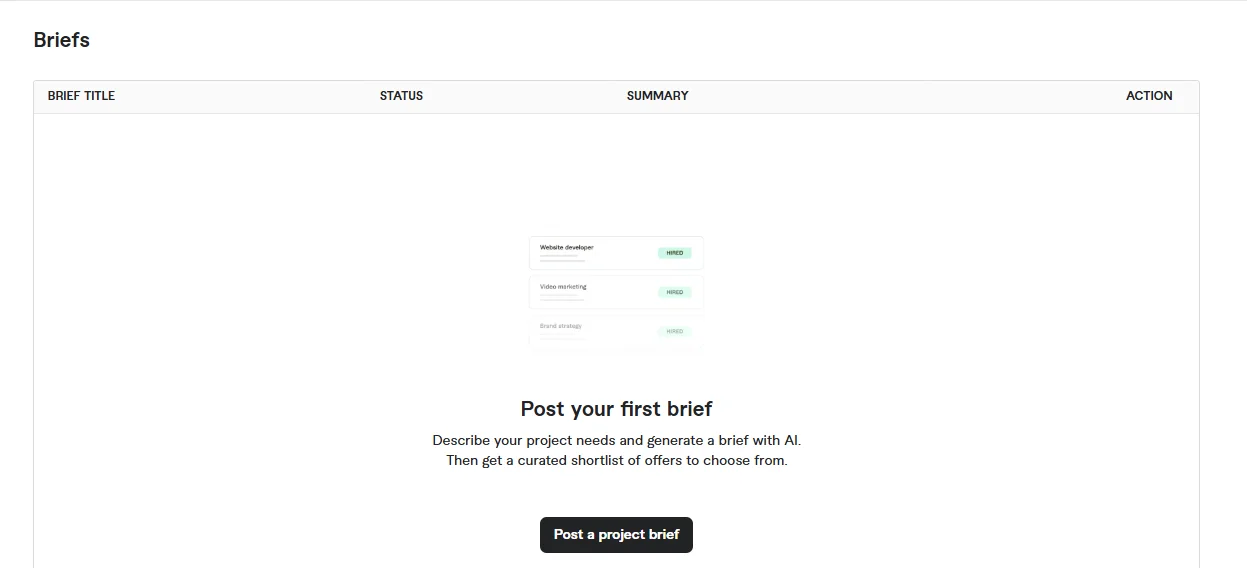
Fiverr has been evolving this feature; in some account types, it now appears as “Briefs” rather than the traditional Buyer Requests section. The format may look slightly different depending on your account level and category, but the fundamental dynamic has not changed: buyers post a need, sellers respond, and the quality of that response determines whether a conversation starts.
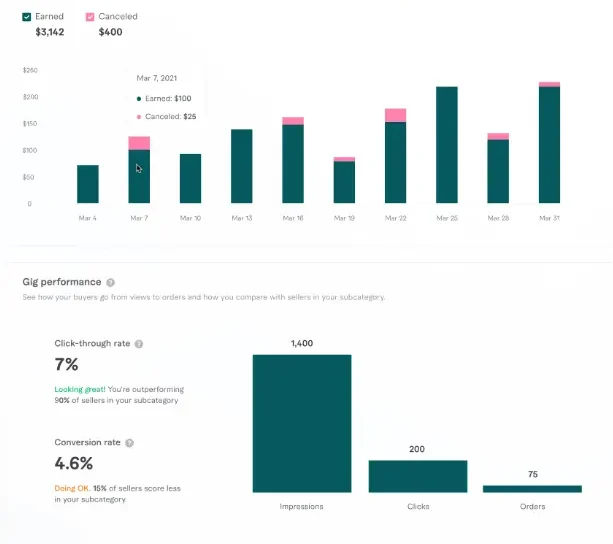
A one-in-five acceptance rate, meaning one response for every five offers you send, is realistic and good for a competitive writing or design category. Do not measure success by your first ten offers. Measure it after fifty, with offers that are genuinely personalised each time.
The sellers who get consistent work from Buyer Requests are not the most talented sellers on the platform. They are the ones who treat every offer like the buyer is the only person reading it, because in every way that matters, they are.
Fiverr regularly updates how its request and briefs system works through features explained in the Fiverr Help Center.
Disclaimer
Fiverr’s features, ranking systems, and Buyer Request/Brief availability may change over time. The strategies shared in this article are based on personal experience and practical observations, not guaranteed outcomes.
If you want to learn about Fiverr Gig image ideas, read this guide: Fiverr Gig Image Ideas That Increase Clicks and Orders in 2026.
Taha Sohail is a professional blogger and cyber engineer with hands-on Fiverr experience across content writing, technical articles, and cybersecurity topics. He writes practical guides for freelancers who want real results, not recycled advice.




One Comment on “How to Write Fiverr Buyer Requests That Get Accepted Fast in 2026”